Tuesday, April 3, 2012

Social Media And Family History

One of the reasons I started this blog was to connect with family members unknown to me. There are multiple reasons, one being able to collaborate with them on our research.

The blog is a way for people to find you that are using the search engines such as Google. Blogs can be very strong this way.

I also post many of my articles on Facebook and Twitter. On Facebook I am taking opportunities to friend those who I can tell are relatives, mostly Cragun families. Thus the blog becomes a part of social media.

This week two cousins have found me. One asked me some questions on Facebook about my grandfather and his possible involvement in a mine. I have information on that. I am posting it here and going to answer him on Facebook, by referring him to this article.

Another Cragun left me a note that one of the articles I published helped him find an ancestor. Pretty Cool. I am glad you found my blog and that it helped you, Leon Cragun.

Here is to my Cousin Cecil Cragun and his question:


As I have mentioned in previous posts, I am inviting those
with a same relative to be a guest contributor to this blog.


Monday, April 2, 2012

Have You Watched Any Genealogy Webinars? A Great Way To Learn

This site, http://GeneaWebinars.com/ is the place to go for you to see what is available in genealogy training by Webinar. The link above is in my sidebar under favorite tools and sites.
This is a partial schedule for April, but you should check it regularly for updates. Go to the site: open the class: Determine the time zone: Register:
Monday, April 2
9:00pm
 1940 Census Images and Indexing UPDATE hosted by DearMYRTLE and RootsMagic
Wednesday, April 4
2:00pm
 The Pursuit from Genealogy Hobbyist to Professional by John Kitzmiller and Claire Brison-Banks
8:00pm
 Using Probate Records


9:00pm
 1940 Census Images and Indexing UPDATE hosted by DearMYRTLE and RootsMagic


Saturday, April 7
1:00pm
 Turn iGoogle into your Personal Genealogy Research Homepage with Lisa Louise Cooke


Tuesday, April 10
9:00pm
 Going Digital: Organizing Your Research Files Electronically


Wednesday, April 11
2:00pm
 Genealogy on the Go - the Families app for your Android, iPhone, iPod Touch, or iPad by Malcolm Green


Friday April 13
2:00pm
 Preparing for Mother's Death


Please note that not all of them are free. Darn

Sunday, April 1, 2012

What Is The Correct Spelling of Your Name? Are You Sure?

Church of Cragyn (now Cragie)
In olden times people often spelled names as they sounded. This fact makes the genealogy research game more than a little difficult. What is your last name? Does it sound like it is spelled? If it is Jones couldn’t is sound like jonez? Or if it is Johnson could it sound like Jonsun? Here are some of the many ways my last name has been spelled:
Cragun, Craguner, Cragin, Cragan, Cragum, Cragon, Creggan, Creggon,
Creagan, Kraghen, Kragahen, Kragun, Kragan, Kragon,
Croghan, Craigan, Craigun, Craigon, & Craigen 

In some families one child ended up spelling their name different than their brothers or sisters. These problems make the genealogy - family history game very challenging.
So if I am searching on the internet to see if something comes up on my grandfather Patrick’s son Elisha which way do I spell his name? Do I try every spelling? I guess I do.

What can make it interesting is to discover what gave your family its last name. In our case it could have come from the name of a town where the family once lived known as Creagan, Scotland. Does that mean my family originally lived in Scotland? Perhaps we shall find that to be a fact one day. Or did they live near the Irish mountain of Croghan and get their name that way? Or are we related to the famous portrait painter in Ireland Martin Creghan?

In 1272 there was a Church of Cragyn in Scotland that was given to the monks of Paisley by Thomas de Cragyn. It is thought we assumed his name as we lived on his land. Isn’t his fun?

I’m thinking I like being named the same as the church and will spell my name Cragyn not Cragun. Wait, they have now changed that name to Cragie.

Can you tell how exciting it is to get something figured out by your investigation, that no one else has figured out.

The cool thing is that through modern technology such as blogs or FamilyTree allows you to share what you learn and can prove with all the world.

Friday, March 30, 2012

From Family Search.org RE: Arizona Records Being Public

An Old Irish Civil War Veteran and Resident of Prescott, Arizona Territory

Arizona is one of the few states that has online free access to birth and death records. Before looking anywhere else, check Arizona Genealogy Birth and Death Certificates for births from 1855 to 1935
For birth records after 1935, Arizona is a "closed record" state which means vital records are not public records. Only immediate family and selected others may obtain certified copies of vital records.[1]

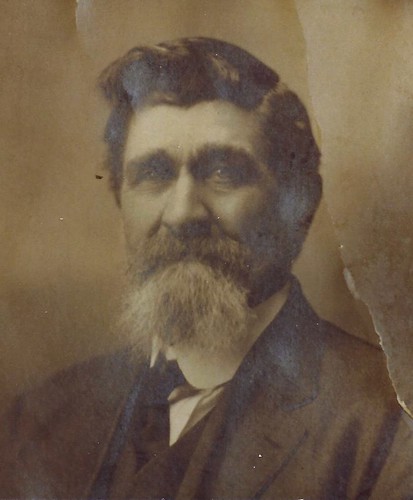
This is an old, undated photograph of a man named Farrell Tiernan. Mr. Tiernan was one of the many colorful characters who populated the Arizona Territory during the days of the Old West. Click the photo for an article about him.

To Each Of You Who Serve Others

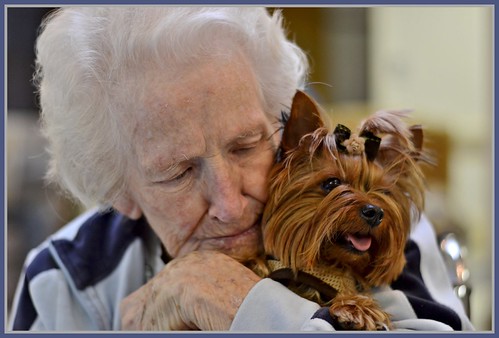
Visiting My Grandma

Go give to the needy, sweet Charity's bread for living is giving  - the angel said.

But must I keep giving again and again - my selfish thoughtless answer ran -

Oh no, said the angel piercing me through.

Just give til the Master stops giving to you.

Unknown

Thursday, March 29, 2012

How Far Will A Man Go To Court A Woman?

20110818-IMG_5899
So what does that have to do with Genealogy?

Actually, thinking about that question might help a lot in researching your ancestors.

If you are looking for records of parents, siblings, or children of an ancestor you just might find they aren't too far away from where their spouse lived before they were married.

Long distance courtships were a lot closer in the good old days than they are now.

Birth, death, or marriage records might just be a buggy ride away. Check out vital records nearby.  In the pre 1900's if a man had a horse he might have a 5 mile radius because he had to be home at work the next day . Also, spouses families (in-laws, grandparents, aunts & uncles may have known your ancestor. Contact their researchers.

By the way, death certificates, mortuary, and sexton records may contain different details than what you have been given. Check them all. Check for licenses, certificates, and registers. Look for contracts, consents, or any documents. Check the record dates. I just found a document that proved my mothers journal wrong on a birth date of  a grandfather. It's all part of that detective thing that hooks you. Tip: Request a photo copy of the original record. It will show all the details where a transcipt may not.

Wednesday, March 28, 2012

Joseph Rich Porter: Part 1

Porter Photos
By Bertha Cragun: Granddaughter: deceased: From her records

Joseph Rich Porter came to the valley of Porterville as a young man of eighteen.  Within a year he became the first school teacher.  He shared this responsibility with a young woman, Anna Wood for two years, then she moved away.  He was the only teacher many of the children from the Canyon Creek district ever had.  The area encompassed from East Canyon to Richville.

He was one of those early pioneers who exerted influence on the people of Porterville and helped shape their destiny for many years. He tried to instill in his students a desire to do their best, a love of community, country, and church, and a belief in themselves.

He served the people of East Porterville as their Bishop for twenty years, and throughout life filled many church related positions.  He was active in the political arena all his adult life. He served as selectman (a Presidential appointment) in the Territory of Utah, County commissioner after Utah became a State, Probate Judge, and Superintendent of Schools. He was elected a member of the State House of Representatives for three different terms, and a chaplain of that body for two years.

He helped organize a debating society, a drama group, and was a trustee of the ZCMI in Morgan. In addition to all this, he farmed 50 acres of fertile land.

His first wife died soon after the birth of their first child, a daughter. Six years later he married Electa Elizabeth Porter. They had eight children.

He was often called J.R. Joseph Rich was born 29 March 1844 in Charleston, Lee County, Iowa. Just two months before J.R.'s birth, Joseph Smith, the spiritual leader-prophet of his family and of The Church of Jesus Christ of Latter Day Saints had been murdered and the entire L.D.S. community was in chaos and distress.

John President Porter and Nancy Rich Porter, his parents were now placed in the ambivalent situation of extreme sadness at the martyrdom of their prophet and the anticipated joy of the arrival of their first child.

Their prophet had been named Joseph and Nancy's father was Joseph Rich. A fitting name for their new son was Joseph Rich Porter.

For this family, as with all the Latter Day Saints, the next two years were filled with turmoil, tremendous sadness, and preparations to go westward to some unknown destination. Yet, too, there were times of infinite spiritual uplift and happiness, brotherly affection and the togetherness that only trouble and persecution will bring about.

In September 1845 the Saints were scattered and persecuted. Many homes were burned and their occupants driven out into the winter cold. 

When the Sheriff took a determined stand in favor of the Saints he was arrested and charged with the murder of a mobber. Violence against the "Mormons" was permitted to go unchecked.  Governor Ford had promised and pledged his word that the murderers of the Prophet and his brother, Patriarch, Hyrum Smith, would be brought to justice. The citizens of Warsaw, Illinois, where the murders took place, informed the Governor in no uncertain terms that they would not support him. They were to have their own kind of mock court. Similar stand in opposition to the trial of the murders, but expelling the "Mormons" from the state. Governor Ford, by his subsequent actions, acknowledged his inability to handle the situation with fairness and impartiality.

For about a year the people of Nauvoo had been crossing the river into Iowa to escape the persecutions going on in Illinois. Those who could find room took these exiles into their homes, as did some of the Porters, but most of the people camped at a place called Sugar Creek. The weather was inclement and extremely cold, people were without proper shelter, with only wagons or tents to protect them from the elements.

J.R. was three years old when he, his parents, brother Sanford, and most of this extended family began their journey westward.

To be continued

Tuesday, March 27, 2012

Is It TIme To Blog For Family History Purposes?

Please not as you read this article that I invite you to have me link to your blog, or to write an article as a contributor on this blog.

The era of wasting time duplicating each others research is, thankfully, coming to and end. 

So is that interesting story being lost in your file cabinet a sad fact that can change.

Sure you can be the proud finder of information and keep it secret if you want, but I believe you will be persuaded that COLLABORATION is a winning concept.

Time and effort is a valuable resource. By collaborating we give ourselves the gift of each others time and effort. It's a win win concept.

There are going to be numerous vehicles for those of us, especially for those who have limited time to spend doing research.

One of those I wrote about a few days ago, is SharingTime
I wrote about this concept in the article inspired at the RootsTech conference: Click Here

Now I introduce another vehicle: Your Blog About Your Family.

To illustrate, three of my four grandparents were Mormon pioneer families: Cragun, Porter, and Bingham. Jointly they have thousands of descendants. You might think there are stories and facts easily found on line, provided by their loving descendants. Nope, if you do a google search for information on these 3 lines you find a dominance of commercial sites with a narrow slice of duplicate information and information of limited value.

However if you are searching for Patrick Cragun, for example, besides duplicate information you now find on page 1, near the top, this blog - my blog. I will explain at the end of the article why I have attained this type of search results so quickly. One reason is that it is a Google blog. Also, almost every result out there is a website, not a blog. Search engines like blogs better than websites. More on that later.

If you blogged, your site can be found by Google and other search engines. There are many benefits to that. One being unknown cousins can find you.

As important as being found is the content posted. You will care more about the content than a business will. You can post more depth of stories. You can post documents. These documents can link to the new FamilyTree that will be awesome and free. You can update and publish your research instantly. It is likely that your content is important and relevant. Search engines analyze this. Every time you update your blog with new content you automatically tell the search engines to come to your blog and copy (index) the information you just added.

The article, the photo clip above, which Google has already delivered to page 1 was an article I posted yesterday. No other sites on page 1 have fresh information on them. Most of them have far less information about Cragun. Because my content is fresh, and because I am posting several times a week I am getting priority in the searching process. The more I publish the stronger this blog will get.

In the spirit of collaboration, every that site I find that posts family history information relating to my ancestors will get exposure from my blog. I will at least provide a link to your blog, and perhaps an article. We can be a reference point to each other, at least from me to other sites. As more and more people do this with their names, the more positive results they will have.

Patrick Cragun was an immigrant. Every Cragun in the United States is likely a descendant of his. He had 9 children. Some live in the midwest nearer where he died than I do, making it more convenient for them to check out some local sources. If we are all posting our research live and cooperating or collaborating greater depth will happen in discovering our ancestors.

I am thinking of the depth of discovery the popular show, "Who Do You Think You Are" garners. Of course they have resources we don't have. Correction, they have the resources we don't have as individuals. But if all the Craguns, the Binghams, the Porters, or  your ancestors were collaborating, we too could accomplish amazing things as do they.

Writing a blog such as this is not difficult. It does have a small learning curve. Setting it up only takes minutes. For some of you this is all you need to know. For others I will soon write an article on how to set up and publish a Google blog.

Final point. I hate to say this, but I know most of you won't do a blog. You could, you should, but you won't.

So here is my offer to those of you who have common ancestors to me that won't do what I propose. You can post and get author credit for posting on this blog.

My blog can become our blog. That makes it easy. Contact me if that interests you and we can discuss the details. larry@cragun.net Check my tree out by clicking here. We just might have common ancestors. Lets make more progress by collaborating.

A few reasons what I propose brings you up to the top on Google and other search engines:
Google makes sure it captures all new information on its own blog network. That's why a Google blog.
  • Blogs have technology that signals the search engines to come and get the new posts.
  • Blogs are easy for the search engine to analyze as to the what the content of the blog really is about.
  • There are things you can do to an article to make search engines give it priority on the results.
  • Blogs are so simple to setup, write on, and to customize.
  • By writing multiple articles on a topic or certain topics, such as your family names you improve your results. These are done naturally and creating what is called natural search engine optimization without any gimmicks.
PS: Please let me know if this inspires you to get going. I was inspired to do this by another genealogist.

Monday, March 26, 2012

Understanding DNA and Genealogy

There was a lot of buzz about DNA and Genealogy at the recent RootsTech conference. I found myself impressed. Just think, we can determine if we have the same ancestors, as another. It will become a way we find living relatives.

I decided to refer you to a recent article I have come across. It has basic information and more. I will copy a portion and give you a link to the full article.

Roberta@dnaexplain.com  


Two portions of our DNA are not combined with that of the other parent. The 23rd
chromosome, in the green box above, determines the sex of the individual. Two
X chromosomes produce a female and an X and a Y chromosome produce a
male. Women do not have a Y chromosome (otherwise they would be males) so
they cannot contribute a Y chromosome to male offspring. Given this scenario,
males inherit their father’s Y chromosome unmixed with the mother’s DNA, and
an X chromosome unmixed with their father’s DNA.

This inheritance pattern is what makes it possible for us to use the Y
chromosome to compare against other men of the same surname to see if they
share a common ancestor, because if they do, their Y chromosome DNA will
match, either exactly or nearly so.

Autosomal DNA, X chromosomal DNA and, in males, Y chromosomal DNA are
all found in the nucleus of a cell. A a fourth type of DNA call mitochondrial DNA,
or mtDNA for short, resides within cells but outside the cell’s nucleus.
Mitochondrial DNA packets are the cell’s powerhouse as they provide the entire
body with energy.

For both genders, mitochondria DNA is inherited only from the mother. Men
have their mother’s mtDNA, but do not pass it on to their offspring. Women have
their mother’s mtDNA and pass it to both their female and male offspring. Given
this scenario, women inherit their mother’s mtDNA unmixed with the father’s and
pass it on generation to generation from female to female. (Males carry their
mother’s mtDNA, but don’t pass it on.) This inheritance pattern is what makes it
possible for us to compare our mtDNA with that of others to determine whether
we share a common female ancestor.


DNA Testing for Genealogy - What Can It Do For You??

Paper courtesy of Roberta Estes,

Sunday, March 25, 2012

SharingTime - For New Family Search Users - Awesome

20110725-IMG_5665
A Porterville headstone, some Carters crossed the plains with the Porters

SharingTime makes family history research simpler. It is an add on product to New Family Search and will still be valuable when that site becomes FamilyTree.


If you don't have access to new family search, just be patient, FamilyTree is about to come forth.

There is a $15.00 per year cost to join SharingTime.

Here are a few reasons SharingTime is as I say, Awesome:

Find Sources: SharingTime easily and visibly allows you to click on a list of releveant websites to quickly search for that ancestor without leaving new family search. (or FamilyTree)

Contributor Circle: This lists members that have contributed to the selected ancestors immediate family and have placed their email address on file. You can check the boxes next to the members you would like to emai. You can send an email and their responses come to your email posted in new family search.

Ancestor Index Manager: SharingTime works by remembering your tree and  giving yoou rsults based on what it knows about your ancestor. You can control how broad a tree SharingTime remembers for you. This coordinates with their cool navigation bar in making your searching more effective.

Temple Ordinance Tools: Has a ready and almost ready feature. I love this, almost ready just needs one more item to be ready. What a great list.

Ancestor Split:  Allows you to split up incorrectly combined people.

Place Investigator:  Organize your research by place. Type a place name in the search bar to see which of  your ancestors lived in that location. How is that for awesome. This ties to a future emphasis I will be making about searching and learning about areas as an important way to research effectively.

Family Tree Dead Ends: This shows all the dead ends in your family tree so that you can quickly identify areas for new research.

Once again, FamilyTree will be open to membes or non members of The Church of Jesus Christ of Lattter Day Saints. The church is preparing servers farms to host about 2 million new users in the first two years it goes live. Just leave me a comment if you want to be notified when it is available. I am a beta tester and I cannot tell you accurately just  how excited I am about it. Every Mormon Congregation has someone that can connect with you to teach you this ever growing in popularity hobby. Actually not a hobby, a process of connecting with your ancestors.

Click here to go to the SharingTime website:

If you are interested in understanding more about FamilyTree just use the search bar on this site to find articles I have written giving details of what is is like.