Showing posts with label porterville. Show all posts

Tuesday, February 3, 2015

Bertha South? Salinas? Cragun

by Larry Cragun


Bertha is my mother. She was born in Pocatello, Bannock, Idaho on August 24, 1916. Through our childhood years only small pieces of her story came to light. For example, she told us her maiden name was Salinas. Then when I was about  17 years old she said her maiden name was South. That was confusing to me, but what the heck, South it is, I guess.

Curiously, my best friend Calvin McOmber had cousins that were Souths. They were from Salt Lake City and came to spend vacation time with my friends the McOmbers in the summer. We became good friends over the years and this summer, having a South grandpa I told Mary Ann that my grandpa was a South. Mary Ann jumped all over that and insisted we go tell her dad. "Dad, Larry's grandpa is a South". "What's his name he asked?" "I don't know I answered." So with all of us curious by now I called home and asked my mom my grandpas name. (I insert here that only one of my grandparents lived long enough for me to know them, my dads mom.) I said out loud that my mother said my grandpas name was Edward Rich South. Agast, Mary Ann said that's the name of her grandpa. "Dad, he has the same grandpa we do!" Mary Ann's father quickly took over the phone to talk to the half sister he never knew that he had. We only lived a short distance from the McOmbers and he went an met my mother. I don't remember how long he was there but I do remember how good they treated my mother and us from that day forward.

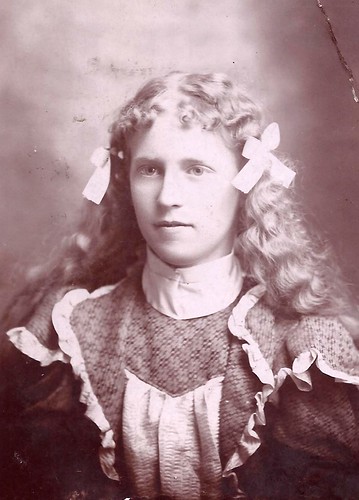
Treating  her good was knew to my mother. Her mother had her out of wedlock it seems. The story is a story attached to Nancy Salinas Porter in family tree. It is different that we as kids assumed, that my grandma was a slut.  Her story is actually very different. Grandma Nancy died at age 44 and of course mother didn't talk about it. We have only bits and  pieces to explain my mothers internal gremlins.

We can get a glimpse by these facts and a story. Grandma Nancy Porter grew up in Porterville, Utah.  Her dad had been Bishop of the Porterville Ward for 17 years. Nancy was the Stake Young Womens President when she got pregnant with my mom. Her dad had passed away prior to the pregnancy. Four stories makes obvious the shame grandma Nancy brought to Porterville. The first is that mother was having fun on a  hay wagon ride with the kids in Porterville. At least it was fun until a parent stopped the wagon and told my mother she couldn't ride with the other kids. This cruel moment left a permanent indelible mark on her self esteem. Second, her Uncle Arch Rich was the Bishop at this time. My father told me that he was so cruel to her that she couldn't stay in Porterville, thus the move to Burley, Idaho where she died a young age. Thirdly, I remember being about ten years old and driving to Porterville with my mom to visit a relative. The picture of the house is clear in my memory. I think it was John President Porters home, as I have returned to Porterville to try and find it. Mom didn't tell me why she went to the house only that I must stay in the car. She was only in the house a short time when she came out sobbing.

Fourth is the story of how she met Thomas Salinas. Mother was about eight years old living in Burley now. She was out in the yard eating a piece of dirty bread. Thomas walked by and asked why she was eating that. "It is all we have she responded". Thomas lived next to her Aunt and asked the Aunt if this could be true. "It  possibly is she responded". The next day Thomas was at grandma's door with a bag of groceries, meat and potatoes. He told her that he was from Mexico, working at the potato processing plant. He said he hadn't had a good home cooked meal since he left Mexico, and if he provided the food would she do the cooking? This began a courtship where over a year later they were married in the Logan LDS temple.

I am sure it is my mother that sent into the LDS church records that Nancy Athena Porter and Edward Rich South were married in Salt Lake City. I find no proof of that. The letter of Nancy's story implies that either she was persuaded to an illegal polygamist marriage or that she was persuaded to a future marriage. I lean towards the later, that they were never married. Mother always called Thomas daddy. Because of these facts I choose to select Thomas as the grandfather I follow in family tree. It his he whom my grandma really loved. It was he who treated her well.

I guess this story is not unique, that many of our trees have things about them our parents or grandparents want kept in secret or not talked about. As for me I want the true story. I am thankful that at least Nancy had the foresight to write part of it down, or have someone type it for her.

I would say that my mother carried her complexes throughout her life. I wished that she had been a  happier person. Perhaps things are better for her now. Perhaps those in Porterville whom have gone on have had a chance to make things better. I hope so.

You might notice in the fan chart above that the Salinas line is sketchy. I am hoping my Spanish speaking children and grandchildren are able to research this line.


Sunday, May 20, 2012

Sanford Porter, An Example of A Legacy.

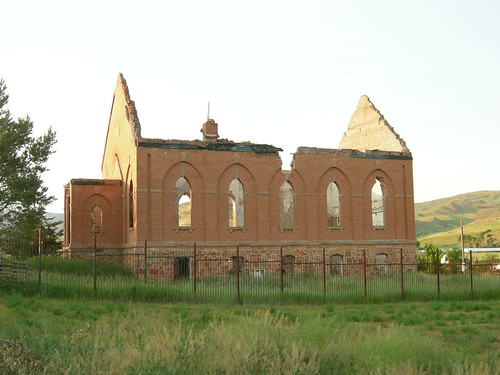
Porterville Ward ruin
Origonal Portervile Church -It is for sale
As I spend time researching ancestors I have become totally aware of the importance of having at least a small life history or special experiences of our ancestors.

When Sanford Porter, who joined the Mormons right after the church was organized, took the time to dictate pages and pages of his lifes experiences he created a legacy.

His devotion to the Bible, his concern about his own being after being totally rebuffed by the local Christian ministers, and the miracle of his prayers being answered - how they were answered is a treasure to we his multi generation grandchildren.  Not being miraculous but also important to me is discovering in a library a several page story of his son John President Porter. John President was my great great grandfather Porter. What I gleaned from John President's story was a similarity in his personality to mine. He provided for his family but always lived with the believe there was gold in the Hardscrabble hills of Morgan County.  He stuck to that belief until days before he died. That's my nature.

What about you. Yesterday Kathleen and I joined about 100 people at the Riverton Family History Library. What a neat day. Glen Rawson of the Joseph Smith Papers T V Show spoke about family stories. He shared a few pioneer stories that were brief but inspiring.

I had never heard of some of the people he read us about. That was one of the points. If I were a descendant of any of those people, I would have treasured the story.

We are building a legacy for our grandchildren and great great grandchildren to feed upon. We too may not be historic figures, but to our descendants we are part of them. They will want to know us. Just as Sanford or John President, or any of my ancestors and their stories are treasures, so will our stories as we write them down.

Truly Sanford Porter is an example of a legacy. Join me in the commitment to leave mine.

Friday, April 6, 2012

John President Porter

My Great Great Grandfather: Written by a grandchild from his marriage to Nancy Graves - published by permission

My grandfather, John President Porter, son of Sanford and Nancy Warriner Porter, was born July 28, 1818 in Plymouth, Oneida County, New York. His father had become interested in the teachings of Joseph Smith, and in July 1830 became a member of the Church of Jesus Christ of Latter Day Saints. He was converted and baptized by Lyman Wight. His entire family soon followed him.

On October 5, 1843, John President Porter married Nancy Rich at the home of her brother, Charles C Rich, and in the presence of her family in Lee County Iowa. John and Nancy made their home in Charleston, Lee County, Iowa, where their son, Joseph Rich was born March 29, 1844. A second son, Sanford was born December 25, 1845.

Some time later they moved to Nauvoo. In 1847, Charles C Rich, who was then living in Winter Quarters, went to Nauvoo on business and to visit family. When he returned home, grandfather and his family followed him to Winter Quarters, arriving there on May 21, 1847,  On June 14 of the same year, they all left for the Rocky Mountains in Charles C Rich's Company. While en route John P Jr, a 3rd son was born at Sweetwater, September 4, 1847. They arrived in Salt Lake City, October 2, 1847 and camped where pioneer park is now.

A little later they went to Centerville and took up land there. They had always understood the bottom land or land lying close to the river was more fertile and more productive than the higher land. With this thought in mind, they took up land down near the lake. A few years later they were convinced that a salt lake is quite a different thing from a running stream of water. They found the soil was full of alkali, and would produce very little that could be used as food. By the time they discovered their mistake, all the best land in Centerville had been taken up.

In November, 1851, a baby daughter was born and mother and child both died. The father found it a hard and desperate struggle to provide and care for three little boys, the oldest only 6 years old. Friends and relatives were kind and gave all the help they could, but the times were so hard, food so scarce, and the tiny house so crude and comfortless, a mother in the home was badly needed. 

On March 24, 1853 he married Nancy Graves, who was a widow with four little daughters.

During the gold rush, grandfather made some arrangements for his family and he went to California and panned out gold for a short time. He returned home with quite a large sum of money and a bag of gold nuggets, which enabled him to provide much more comfortably for his large family. The nuggets were exchanged for necessities with people passing through the country.

A short time after grandfather returned from California, word came of the approaching army from the east, and the Saints were called upon to abandon their homes and move south. 

The following is from my fathers journal: "Something that was indelibly impressed on my mind as a young child, was that the government was sending an army of men of men with guns to kill every Mormon. Everybody was talking abut it, but Mother said they would not be able to do it. Then I remember Brigham Young told all of the people that the army was getting close. They called out all the spare men and boys, one, Eli Kilbourn who I knew, to go to Echo Canyon and help build up a defense so the could hurl down rocks on one side and bombard the other. It seemed to me, from what they said, that Brigham would do anything, no matter how many men came.

The word came that Lot Smith had gone east with a few men, and had surprised two trains of wagons and teams. They carried off their provisions and supplies, drove off their oxen and burned the wagons and all the grass before them so they would have to stay there all winter. This was the fall of 1857.

The next spring, as I remember, father had just planted his crops when word came from Brigham Young that the army was coming, and for everyone to get ready at once to move south, and leave their buildings ready for the match. A few men were to be left to burn them at a given signal.  I remember the move distinctly, the days of travel, stopping at a place called Pondtown. I remember the strings of trout the men and boys caught out of the ponds. I remember that Uncle Lyman built a pig pen and while at work the Indians gave us a scare and we boys ran to him. How long we stayed there and the return trip is not clear, but word came that peace had been made with the army, to go home seemed to take of the strain we were under" Father was 4 years old when this move was made.

continuing from fathers journal: My memory now reverts to the cold winters, the snow being waste deep or more.  The cold East wind swooped down on Centerville. Chickens were blown to the lake, pigs frozen to death, roofs blown from our houses. The roof of Mr Higby's house was blown off while he was away from his home. His wife rushed out and was blown into a fence, and unable to stand, was frozen to death. At another time, a young man living with us, Thomas Spackman by name, came home one night nearly frozen to death. They pulled off his overalls; they stood up straight by the side of the wall. 

Then I remember my Uncle Warriner and Uncle Sanford and Thomas Spackman hauling saw-mill fixtures over the mountains east of Bountiful to a canyon they called Mill Creek. there were no roads in or out to get the lumber away. As there was another Mill Creek, they changed the name to a very proper one, "Hardscrabble".

The following is taken from the Journal of John Presidents Father Sanford Porter, Sr. "About the year 1858, such heavy snow fell in winter, and such high waters followed and caused such an unusual rise in salt Lake, that most of the farms lying in the bottoms along the shore about fifteen miles were damaged by salt water.  I had to abandon my farm then, and I went over the mountains to Morgan County, Utah, where I found the soil good, and my boys later joined me."

The first trip over the mountains  was made on snow shoes. Sanford Porter Sr, Sanford Porter Jr, and Warriner made the trip and laid out the farms in the snow, then returned to Centerville. In the spring they returned and were well pleased with their farms. They planted some grain and built some log houses, then returned for their families.

Quoting again from fathers journal: "In the spring of 1861 my father, John President Porter, moved his family to Porterville. It was a hard, slow job to get through Weber Canyon. We stopped at the homes of Jedediah Morgan Grant and Thomas Thurston, who were living where Milton now is.

When we reached Porterville, father had a good three room log house ready to move into. I believe my grandfather and two Uncles Warriner and Sanford preceded us. Coming from the hot, dry Salt Lake Valley into the cool, green valley of Morgan seemed like heaven to the Porter family. The river and creeks were lined with grove of cottonwood trees, and the green grass was knee high all through the bottoms when the family reached what is now Porterville.

Another interesting quotation is taken from the journal of Charles G Porter: "During the summer of 1862 father had all the material on the ground for a big barn. The next year all the material for a house. He had dozens of loads of rocks hauled. I remember father kept one carpenter about six months and two men all winter working on the house and barn. The doors, window sash, floors, stairs, in fact all the lumber was sawed in Hardscrabble Canyon, and hand worked by the carpenters. The brick was made by Thomas Brough at his brick yard in West Porterville. The total cost was between $2500 and $3000. In the fall of 1865 as I remember, we moved in."

Grandfather loved the comfortable, roomy new home. The kitchen was large and sunny, and in a corner near the west window, stood an old fashioned, cane-bottom rocking chair where grandfather loved to sit when the days work was done. On a nail in the wall near his chair hung a slate with its wooden frame all bound in bright red cloth. The cloth was attached to the frame with a black cord which passed through the next hole, and so on. A pencil attached to a string  hung on the same nail, and with his slate and pencil, grandfather figured out all his expenses, transferring only the final figures to paper, thus cutting down the expense of his bookkeeping operations.

Grandfather was a good provider. He kept part of his Centerville farm and had a peach orchard. He also grew a patch of sugar there. In the fall grandfather would take part of his family to Centerville and harvest peaches and cane. The cane was taken to Brother Forde's mill where it was ground, and the juice made into molasses. A forty gallon barrel of this molasses was brought home to supply the family with sweets for the year. A half a barrel of peach preserves made with molasses was also brought home. Large quantities of the peaches were dried, to be stored away for winter use.

Grandfather was very fond of honey, and several hives of bees were always kept near his home. It was not an unusual sight to see grandfatehr put his mosquito netting over his head, and fasten it around his head, and fasten it tight around his neck with is shirt collar, pin his gloves tight around his wrists and go out before sun-up to rob the bees and get a supply of fresh honey to eat with grandmothers hot soda biscuits for breakfast.

Beef and pork were produced on the farm to furnish the family meat supply. And at butchering time it was cured in big barrels of brine "strong enough to float an egg". Part of the meat would also be smoked in the homemade smoke house out in the back yard.

Although grandfather owned and operated his farm, at heart he was always a miner, and as soon as his boys were old enough to take over the farm work, he spent more time prospecting in the Hardscrabble hills.  He felt so sure these hills were full of valuable ores, that he spent every cent that could be spared from the family income, trying to uncover rich veins that were always only a few feet away.

This continued as long as grandfather John President lived. The last work he ever did was in the mines. A deep shaft had been sunk in on one of the Hardscrabble mountains and from all indications, as grandfather understood them, a rich vein of gold was just out of sight. He was all excited and promised his wife and daughters gold buttons for their coats that winter.

One morning when he returned to work, he found several feet of water in the bottom of the shaft. They tried to bail it out but it ran in faster that they could bail. A pumping system was badly needed, but was too expensive to be considered unless they could be sure the gold was there. Grandfather decided to drive a pipe deep into the shaft, believing that when the pipe was drawn out, enough ore would be clinging to it to convince his doubting family, that the gold was there. The pipe was driven in, but when they attempted to bring it out, it broke off a few inches under the ground. Grandfather gave up. He sank down on the ground and said, "This is the end."

They took him home in the old lumber wagon, over the rocky, bumpy road, a tired broken old man, and tucked him into his good old feather bed. When he arose the next morning, the family saw a white stricken face. They put him into bed again. He was suffering with a severe ailment and needed expert medical care and hospitalization which, of course, was impossible. Ten days later he passed away, May 28, 1895 at the age of seventy-seven. And the gold in the old shaft is still "just a little way away.

PS: One cannot experience what I have today, wandering around and studying Porterville, without being bound closer to these ancestors of mine. I have only published a bit of what I garnered. Larry Cragun

Thursday, April 5, 2012

Researching On Location - Just A Cool Thing To Do

20110725-IMG_5621-2
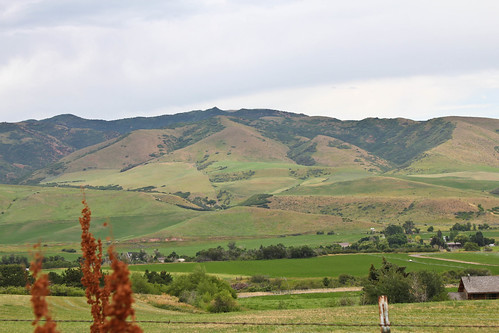
Morgan County, Utah

On our church mission we are to take one day a month and use it for personal research or Temple attendance. Today was that day for me. I was using it to try and learn more about my grandmother Nancy Athena Porter. I went to Porterville, Morgan County, Utah.

First of all, I know we can't all visit all of the places our grandparents lived. But when we can, it's can be both effective and important. I would recommend doing research first so you go focused and organized.

One of my finds was about my Great Great Grandfather, John President Porter. I learned some things about him today that I found interesting. I could relate to him. Tomorrow I will post a story about him that I came upon in the Morgan County Historical Society which they said I was welcome to copy and publish.

I loved going to my ancestors towns Porterville and Morgan. It was a great learning experience. Even though I found nothing specific about my grandmother Nancy. I did learn about other Porter grandparents and more.

I learned how valuable it is to actually visit where your ancestors lived. It was sort of emotional. On that part, I walked where grandparents lived: where their homes were, where they went to church, and I felt what it was like to live in the little valley they settled. My imagination was on fire.

I also learned you can glean more information by being there than by phoning or writing. O K, now I want to go to England and Ireland, perhaps to Tennessee and Virginia.

I began my day by dropping into the local LDS Family History Center. I had previously learned what their hours were, 4 hours in the day time and 3 in the evening. That was a good experience. They were oh so willing to help. As I sat at a table reading from books and personal histories they had on file one person there started calling long time citizens of Porterville and Morgan. People serving in these libraries are really there to serve. I found books and histories that were interesting and I loved it.

They then pointed me to the local Morgan County Historical Society. Here I found books, journals, and stories about many of my ancestors. There was a lot about Joseph Rich Porter, who I have two stories on line now about, and more coming. I found the addresses of two of Joseph Rich Porters grandparents homes. I found their homes that way. They are posted in this article.

The next thing I learned, take a good camera with you. My iPhone1 photos are not that great as you can see.


While looking at the homes I found people to talk to. Some had lived there 50 years or more. One lady driving her grandchildren down an old dirt road, on a big dune buggy sort of machine stopped and talked about the valley. She pointed out another Porter home nearby.

It was a relaxing yet exciting day. It was a day to visit the almost in rubble old church my ancestors helped build. It was visiting the stream that my Grandma Nancy's mother fished from each day. It was realizing a lot how it was to live here, to understand why so many people were born here and won't leave. The young married woman at the Historical Society was an example. She doesn't want to live anywhere else. I understand.

Friday, March 23, 2012

LDS Family History Libraries - Use Them And Be Glad

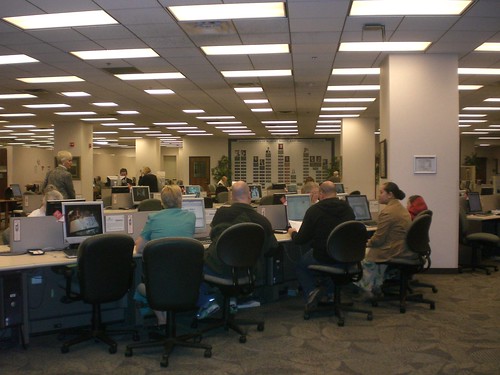
Family History Libraryfamily history library 
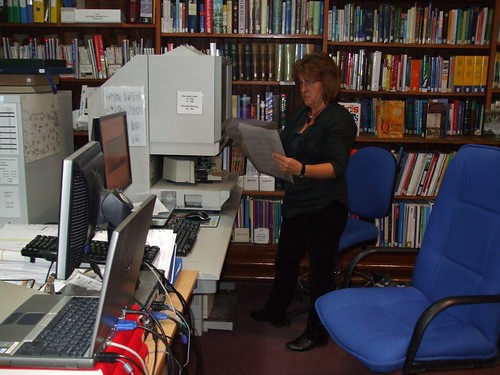
I use 3 photo's in this post to illustrate some of the resources available at the LDS (Church of Jesus Christ of Latter Day Saints) Family History Libraries. For example Computers, even with access to 29 paid subscription sites, someone to answer questions, volumes of books for research, and microfilm.

Family History Event
There are over 3700 local Family History Centers, which means there is probably one near you. The local ones aren't as big as this one in Salt Lake City, but they do offer a lot and access to the microfilm.

I have ancestors in the Porter line. I called Porterville's local family history center today seeking help with information that would help me with writing my grandmothers story.  I was referred to an Ann Porter. She took down information about my specific ancestors and was going to research that library for me. I am hoping she will find a journal by my grandmother, her mother, or her siblings. If so, I will make the trip to see them for myself.

There is a lot of help out there for those seeking to catch the spirit of learning about their ancestors. Use The Family History Libraries and be glad.

Tuesday, March 13, 2012

What Anger Do You Carry? A Family History Question?

My grandmother
Nancy Athena Porter

I am writing my grandmother's, Nancy Athena Porter, life story. I hope to have it completed by the end of the month.

At times it has been an emotional experience. That might seem strange as she died at age 44, 11 years before I was born. I never knew her. My mother rarely spoke of her and little is written about her.

She was born and raised in a town founded by her grandparents and named after the family: Porterville, Utah.

I have decided to call her the Princess of Porterville for numerous reasons: her name, the fact her father was prominent including being the local Bishop for 20 years, and that she was a leader in many ways being some of them.

But my Princess fell from the grace of her community. She bore my mother out of wedlock. This resulted in scorne and rejection from the good Porterville folks. Her father had died years earlier and now her Uncle Arche (Arther Rich) was Bishop. Rather than counsel and comfort her Uncle Arche provided condemnation and rejection. I wonder if she didn't die young from the grief, and sadness her life endured as a result of her mistake.

But grandmother Nancy moved and moved on. She moved to Burley, Idaho where an Aunt was caring and kind to her. She married a kind man who was crazy about her, Thomas Salinas. Her new church surroundings led her to know she was forgiven by her Father In Heaven. She and Thomas were married in the Logan Temple. She held important church callings in Burley.

In what little is know about my grandmother it seems that she dealt with her challenges without bitterness toward anyone. There are many facets of her story where anger could have easily been embraced by her.

I feel as though I have had to write this story for her. In doing so it seems she has a message. Over and over, daily even I am driven by this theme of not holding anger.

Now I shift gears a bit. Don't we all have people to forgive? Or are we even there yet, considering such a need?

I have been reminded to think back to the time I feel I was most offended. It was a pretty serious event in my life. The offender has died now, I got over it, but I now wonder if I have forgiven him. Perhaps it's only a start that I can say at least I am not angry any more.

Writing the book on my grandmother, knowing who might read it, understanding the trauma that can come from certain family relationships, and sensing the message my grandmothers story will deliver makes me wish we could all get over it so to speak.

Grandmother Nancy refused to give up things of great value to her, despite her problems. Can we all say that? I have one relative that told me she would love to have her Mormon heritage back, but won't because of harm placed upon her by her father.

I am aware how permanently anger can sever a relationship. If it is with a relative, the schism can last for generations. I don't have to look far in my family history to see that fact.

Sometimes just one thing we spout out can have an everlasting effect. The story below taken from an LDS conference talk by Boyd K Packer is an example. I went to this talk today because the second story in it has been most influencial in my undestanding of the importance to me of letting go of anger. It has been a guide that has helped me a lot.

Please read the entire article by clicking here, your healing one relationship might bless generations.

From Boyd K Packer:

I read somewhere of a young couple who settled in the wilderness. While the man cleared the land, his wife tended things about the homestead. Occasionally, the cow would get into the garden, and the husband would complain.

One day, as he left to get supplies, he said in a sarcastic way, “Do you think you’ll be able to keep the cow in while I am gone?” She thought she could; she would try.
That night a terrible storm arose. Frightened by thunder, the cow escaped into the woods.

Several days later the husband returned to an empty cabin and an apologetic note: “A storm came up, and the cow got out. I am so sorry, but I think I can find her.”
He searched; neither had survived.

-----
Previously I wrote an article about Simeon Cragun which is another example of families severed for generations.

Simeons only living son, Howard seems unwilling to say much about the problem except there was a lot of anger amongst his brothers and half brothers. For that story,click here.

Thursday, February 9, 2012

Call For Help: Info on Nancy Athena, Electa Elizabeth, or Joseph Rich Porter

Dear Visitors,


I am writing my grandmother Nancy Athena Porters, life history. It will be in the form of a printable e-book. Her parents were Joseph Rich Porter and Electa Elizabeth Porter.

Grandmother was born in 1886 in Porterville and died in 1930 in Burley Idaho

I would appreciate if you have any relevant information that I could include.