by Joseph Grant Stevenson
Showing posts with label Porter. Show all posts
Showing posts with label Porter. Show all posts
Thursday, September 11, 2014


Thursday, May 22, 2014
It's Your Day Thursday: Nancy Warriner Porter
To Demonstrate how much can be accomplished, bit by bit, this is my article number 600. There is always something to write about.
Sorry for the previous bad formatting.
Nancy Aretta Warriner is my 4th Great Grandmother. Nancy was born July 29, 1790 in Vershire, Orange, Vermont.
 She married Sanford Porter in Vershire in 1812. I believe she had 13 children. I see different claims which needs to be verified.
She died May 2, 1864 in Porterville, Morgan, Utah. Her gravesite is next to her husband Sanfords in the old Porterville Cemetery.

(Now there was a Componey of Pioneeres organised of men to go in advance of the Emigration to open up the way by killing the snakes making Bridges & scerching [searching] out a country in the wilds of the Rocky Mountains
The following companies commenced leading forth on their trail from the Horn on the 20th of June following forming into 4 colum[n]s of teams abrest as a precaution against the attacts of Indians upon whose borders we were now entering. leaving the Horn, the trail led us a cross on to the Platt[e] River after trav[e]ling a few days the trains were redused in to 2 columns which was maintained for some five hundred miles; terminating at Fort Larima [Laramie] on the main fork-or rather north fork of the Platt[e]. from this point, the componies traveled in Single colum[n]s. having to incounter a mountainous reagon [region] duering [during] the remainder of the Journey Which was a wide contrast from the levil grade of the Platt[e] valley bordered by low hills on either side now & then dotted with large heards of Buffaloes whes [whose] bellowing resembled the distant thunder. Several bands of the Sious [Siouxs] & Shians [Cheyennes] were met with; there were two or three can[y]ons distributed in the several compones [companies] one in the compony [company] I was organised in—led by—Elder Charles C. Rich—these were fiered [ferried] occasion[a]lly to deter the Indians which had the dsired [desired] effect we were met on one occasion by a band who presented a hostile appearence as they approached to ward us. leaving their Women & Children in the background while the Warries [Warriors] advanced carrying a red flag. our componey was soon thrown into a defencive position[.] they came to a halt sent their flag forward which was met by one of our men. the token of friendship was extended by shaking hands and extending the pipe. the Women & children then came forward and with the men were permited to come within our lines. The Wagon b[e]aring the Cannon was drawn out to which their attention was directed. they gathered around to see the curious Wagon[.] it was plased [placed] in position and on motioning to them they step[p]ed back. the torch was applied & off she went, causing a gineral [general] stampede on the part of the Indians[.] men and Women were struck with consternation for a few minutes. We learned that the impression went out among the Indians that all our wagons would Shoot. no one wished to correct the impression as it answer[e]d well; to deter them from molesting us by day or night;
(I will here note that before leaving the Sweet water we were met by President Young & Compony on their return. he informed us that they had penetrated the Bason [Basin] of the Great Salt Lake in which they had selected a location for the Saints. And having left a few of their number to await the arrival of the Emigrating componies & to put in a <few> Seeds to test the Soil—they were returning to bring their families the insuing season. this was cheering news to all and put anend [an end] to our ankzieties [anxieties] as to where we should find a country; where we could subsist; & live undisturbed by a ruthless Bob [mob] & under the Edicts of Mob-Governers. We continued on with light hearts & Boyent Spirits without an expression of doubt as to the results by our labours in that hither-to unknown Reagion [region].
An interesting comment about Brigham Young and the Salt Lake Valley by Nathan: This Moses (of the last days) looked ca.[l]mly on the distructive eleme[n]ts before him. forbiding the approach of the confiding multitude now wending their way forwarad on the dim trail left in his rear. consisting of Men Women & chi[l]dren fleeing from a Modern Phario. destitute: with but a [s]canty supply of provisions: impeled on, with the assuerance that he whome they chosen to lead them would (under God) lead them a right.
And finally the joy of arriving. But to return. Leaving F T Briger [Bridger] we came to Bare [Bear] River from thense to the Weber, these Rivers head in Wacatch [Wasatch] Mountains on the East of the Bason [Basin] <heading> to the south east. entering the Bason [Basin]; & empting into the Salt Lake on the North East on the 1st day of October we made the summit of the pass over these ranges. When for the first time our anceous [anxious] eyes rested on the Silvery Lake & Slopes intervening in the distance below. the dusty hat, & the faded Sunbonnet was seen waveing above the head of its occupant while shouts of joy and admiration, assended up as each in his exciety [anxiety] made the summit. the tears of sorrow having now fled, those of gratitude burst forth with affusion making a pathway down many a care worn face. the contrast, between the long dreary sage plains; and this valley like a rose bed in the Desert, a wating the hand of the husband man to set it Blooming with f[r]uits s[h]rubs and flowers. coupled with the though[t] of peace and safety from the hand of the oppressor was truly Soul stiring. leaving the summit the trail led down a canyon for a short distance then baring to the right passed over a divide into another Canyon—called Emigration Canyon. here we camped for the night. on the morrow we entered the valley, and desending passed over a large tract of table land came to a more level grad[e] extending to the Shores of the Lake. we were met by some of the preseeding companies who were in advance of us: also the Pioneeres who were left—as before mentioned—
We don’t have a journal of Nancy’s writings but one can imagine her being a part of this. The captain of the Company, Charles C Rich’s wife also kept a journal. From this we learn a bit more. My husband [Charles C. Rich] fitted up his wagons and teams and we left Winter Quarters in June, 1847; he having been placed in charge of a company of one hundred wagons. We traveled to the Elkhorn River, here we had to wait until all had crossed the river, as we crossed on rafts, and Mr. Rich had to wait until they all got over so he could tie the raft and bring the rope with him. There was one young man by the name of Weatherby, who was killed by the Indians while we were here, he died in our tent.
We traveled two abreast the whole distance of the Platt[e] River, for greater safety. There were thousands of buffalo on every side, which the men would kill, so we had plenty of meat. There were also hundreds of Indians to be seen at frequent intervals all the time we were traveling up the Platt River. They were very cunning, and we had to watch them very closely to see that they did not steal everything we had in our wagons. They would shoot arrows into our cattle and sheep; so we found it took more hands to herd the cattle and drive the wagons than we had anticipated.
The Saints had made an agreement among themselves that anyone who had brought a hired man or boy with them, should keep that hired man or boy until after harvest the next year so that no one would go hungry or starve after he got to the valley. Mr. Rich thought he would have to hire two more men or boys to drive two of the wagons. There was one of his wives Em[m]eline [Grover Rich] beside myself who had no children; so we volunteered to drive the wagons until we got to the valley. He did not think we could, but we persuaded him to try us one day and see. We did so well that we had our teams every day after that as regular as the men did until we arrived in the valley. We did not grieve or mourn over it, we had some very nice times when the roads were not so bad. We would make the mountans ring with our songs, and sometimes the company would get together and we would have a dance in the evening on the grass. We did not mourn but we rejoiced that we were going to the Rocky Mountains where we would be free to live our religion, and be acknowledged as wives. We felt that we wanted to do everything in our power to help Mr. Rich out, as his children were all small and he needed our help. I had never had very good health until I started on this trip, and I got to fee1ing so well that I felt it was a pleasure to take hold and do anything that lay in my power to help.
When we got to the Black Hills there was no water for the teams they were almost crazy for want of it, and when we got to the bed of the River they had to dig holes to get a little water, but they could not get half enough. Some of the men were greedy and wanted their teams to have all the water they wanted, which would not leave enough for the other teams. Mr. Rich had charge of the company and he had to appoint men to see that justice was done to each team.
This was obviously not an easy journey. Things weren’t easy once they arrived. When the main body of the Mormons left Nauvoo for the west in 1846, Sanford succeeded in selling his farm at a low figure and accompanied them to Winter Quarters, where he and the family lived until the summer of 1847. Two of his sons, Chauncy and Nathan, remained behind at their former home, until the spring of 1847 - the former for the purpose of assisting his father-in-law to dispose of his property, and the latter, who had sometime before taken up a farm of his own and had made some improvements thereon, remaining for the purpose of selling it. Cold weather coming on before they had made disposition of the property, kept them from joining their father and his family at Winter Quarters that year; and during the winter, Nathan cutting wood for the river steamers, thus adding a little to his store of means for the westward journey. Chauncy was let into a trick by a horse thief, who came to him with a well groomed animal representing to be a race horse which he had just purchased at a high figure. He wished to leave the horse with Chauncy, promising to pay for the pasturage and care of the animal when he should return; not suspecting anything wrong, Chauncy accepted the terms offered. It soon developed that the horse had been stolen, and when the thief was caught he accused Chauncy of being accessory to the crime. At the trial, the latter proved his innocence, but not without considerable expense, considering his financial condition at that time. In the spring, these two brothers set out for Winter Quarters, where they arrived about the 1st of June, some time after the pioneer vanguard had left for the Mountains, meeting their father a short distance from the settlement on his way to Missouri for provisions.
Nancy Warriner Porter, the great grandmother of the present writer, died May 4, 1864 being nearly seventy four years old. Although the written record of this event does not state where her death took place, it may be presumed that it was at Porterville, Morgan County, Utah as this was her home and she was buried in the cemetery at that place.
Nancy M Porter Moffett writes the following tribute: “She reared her children in kindness and love. She was amiable to all and very patient through the trials of life. She left these lovely attributes to her progeny down to the present time. She was the mother of 10 children. Five boys and two girls survived her.
Temples are an important part of the Mormon faith. Families are sealed for time and eternity through covenants made in the temple. All will have the opportunity to choose to accept baptism, marriage, and sealing ordinances performed in temples. In researching Nancy’s genealogy and from genealogy research I have obtained from other Porter descendants it appears that Nancy came from British Aristocracy, even those influential in early American times. It appears by looking at when temple ordinances were offered by proxy to these ancestors that Nancy may have known about them. For her parents, grandparents, great grandmother Elizabeth Pynchon, John Pynchon, Amy Wyllis, and even Governor George Wyllis 1581 - 1694 all had their temple work performed in Nauvoo, St George, or the Logan Temple in the very early days of the church. (most around 1899) George Wyllis was the 4th Governor of Connecticut. Much is written about him. I will feature him in his own story.
Emma Porter Walton submitted the following life sketch: “Nancy’s colonial ancestor was William Warriner of England who tradition says, in the year 1600 eloped with the Lady Alice Clifford and made their escape from Lincolnshire along with other members of the Warriner family who fled the wrath of offended noblemen of York. In crossing a river some of the party were drowned - William, Lady Alice, and one other were saved. William Warriner is mentioned in Canterbury Cathedral records many times. His children were christened there and his wife, Alice, was buried there in 1619. He is said to be the same William Warriner who sailed to America in 1639 and married Joanna Searle. William Warriner and his descendants have furnished soldiers for all the American wars, and they have been well represented among the clergy of several Christian churches; Presbyterian, Episcopalian, Methodist, and Baptist. The were sturdy, stalwart patriots and pastors.
Nancy’s father and mother made their homes in Wilbraham, Mass. Where their first three children were born. Then he was called to serve in the Revolutionary War. He served in Colonel Pynchon’s regiment and in Captain Abel King’s regiment of Springfield county. After his discharge from the army, he and his wife and three children moved to Vershire, Vermont where the rest of their family of nine children were born. Nancy was the fifth child and third daughter of the family.
Here in the green hills of Vermont, Nancy grew up and with the children of other homesteads caught the maple sugar sap as it flowed form maple trees and gathered nuts and berries in the wooded rolling hills. Among those children was Sanford Porter. Nancy and Sanford went to the same schools, attended the same socials, went to the same church, and became sweethearts.
In those days the rule of the eldest son in a family to inherit the father’s entire property forced the younger sons to go out by themselves and make their fortune, so Sanford being the third son left Vershire and Nancy to make his way in the world. With Nancy, to whom he was betrothed , he left his promise that as soon as he had a homestead of his own, he would come back for her. He went into Western New York State and made a claim on land and went about the arduous work of clearing and planting.
In the year of 1812 Sanford enlisted in the service of his country in the war with Great Britain leaving Nancy, a bride of a few months, in a little log house he had just finished on his homestead. Her oldest son Chauncy Warriner Porter was born while her husband was in the service.
Sanford’s personal story, published in volume 1of Porter Family History by Joseph Grant Stevenson tells of Nancy and Sanford’s pre marriage days. “I concluded that I must have a house and housekeeper, for the way I had to live was too troublesome. I had agreed with a young woman in Vermont to marry her. I had written two or three times to her, but received no answer, and I concluded she had given up on the bargain and thought she would not go so far from her father and mother. I wrote a letter to that effect and told her to marry to suit herself if she could. I would not stand in her way and I gave up the idea of going back to see her. I went looking about to see if I could find anyone I liked to keep house for me. I went down the creek about 10 miles from Abner’s to a meeting, and I got talking to a young man there and told him what my name was and where I had my claim., and it was very unhandy for me to go so far night and morning to work and I needed a woman to keep house. He said he knew of one he thought I could get and he would introduce me to her. I stayed with her that night; she seemed very willing to marry me and wanted to know when I would be coming again. I told her I did not know; I had no house of my own and I didn’t know when I could get one. Perhaps in a week or two. I thought I would go and see her again. I went over to the spring and was making ready to go to the meeting and see that girl (when) here came a person and handed me a letter from my sweetheart in Vermont. She wrote with so much affection that I sat down and wept freely. She wrote that she was astonished at the last letter I wrote her - that she had written three or four letters and I had got none of them - that she had not changed her mind at all, and had been preparing to go there as soon as I thought proper; that she was willing to go into that country and her folds were willing she should go there. We all were well acquainted with each other, for we lived within a half mile apart for about 10 or 12 years, and been at the same school together every winter. I did not go and see Miss Polly Done and I heard that she was very much disappointed, for she thought to catch me, and was preparing to keep house for me.
Another interesting story about Nancy, from the Porter Family History takes place when Sanford seriously hurt his leg with an axe. After attending to him with what would be like first aid they agreed she should get help from an Uncle Dake, two miles away. He laid on the floor for fear if he stirred much his foot was start to bleeding again. In no time she opened the door and came in. He describes the dialogue: “Said I to her, Who did you meet?” She said she didn’t meet anybody.” “Well why didn’t you go there?”
“She said she had been there.” “What! Dake’s?” “Yes.” “said I, you haven’t for it is not possible.” “She said it was possible and Uncle and Aunt Dake were coming in all the slop and the slush.” “Yes said I, your clothes don’t look much wet nor shoes nor stockings.” She pulled off her shoes and there was but a little water in them. “Why don’t you pull off your stocking and wring the water out?” “She said there was none that would wring out. In about half an hour Uncle and Aunt Dake came. They had on boots -both of them - that came nearly came to their knees, and as full of water as they could hold and have them walk. Their clothes were dripping wet, “why said I, Nancy’s clothes, shoes or stockings don’t appear much wet, Why said I?” “No because she flew. They knew she flew because they saw her start from them, and her feet did not touch the water. They called her to stop, but she paid no attention, but kept on flying and soon was out of their site. He clothes were not muddy like theirs. This was a mystery to us all. We could not solve or comprehend it, try as we would. To go 4 miles through deep slop and slush, mud and water almost knee deep, and come home dry! It was beyond the supernatural.
The story of Sanford and Nancy is a legend to what is estimated by some as over 5000 descendants. It is an example of the value of writing our life histories which Sanford did, or in his case dictated it. I have the printout provided showing Nancy to Adam. I have spent some time trying to document this work and feel it is credible to a point. Not that I challenge the work done by Mr. Stevenson, but it would be important to document what it claimed. A sign in the family history mission is appropriate: “Genealogy without sources is Mythology.
Below is a copy of a form provided by staff of the Salt Lake City Family History Library. I like it a lot and it is included below. As you will note, there is little documentation. FamilySearch Family Tree is all about sourcing, collaborating, and working together to document mankind. In Nancy Warriners file there are currently seven attached sources. One source is a census of 1850, three are headstone images, and three are stories. There are dozens of possible sources to add facts to this great story. A complete and accurate story would delve into these many sources. I invite you to assist in this effort. Help us know for a sure about what seems to be a great heritage.
Larry K Cragun

Sorry for the previous bad formatting.
Nancy Aretta Warriner is my 4th Great Grandmother. Nancy was born July 29, 1790 in Vershire, Orange, Vermont.
She died May 2, 1864 in Porterville, Morgan, Utah. Her gravesite is next to her husband Sanfords in the old Porterville Cemetery.
A neighbor of ours, also related to Nancy, provided me with a genealogy history that take her lineage back to Adam. The research was completed by his Certified Genealogist brother who has written Porter Family History books. I find this interesting. Having served in the Church History Headquarters as a missionary I get a funny look from other genealogists who I share this Adam information with.
I find it interesting that Nancy genealogy as he has it goes to British Royalty. I have a sense this is correct based on the research I have been able to perform myself.
Nancy and Sanford were early Mormon converts. I take the following from history found on www.SanfordPorter.org. "It was in the month of July, 1830, perhaps a little over three months after the organization of the Mormon Church at Fayette, Seneca, New York, that Sanford Porter, had the first opportunity of learning anything of this new religion. During that month, two Mormon Elders, Lyman Wight and John Carroll visited Tazewell County while on their way westward, perhaps with the intention of assisting in the location of the Central Stake of Zion. They held a number of meetings in the vicinity of the Porter home, and as is the custom with the Latter-Day-Saint missionaries, visited the inhabitants of the neighborhood at their homes.
This visit was a reinforcement to a previous vision Sanford had received which led to he and Nancy being baptized into The Church of Jesus Christ of Latter Day Saints. Nancy and her young family were among the members who experienced horrible persecution for the sake of the religion. This ultimately led to their joining the trek westward to the promised valley, The Great Salt Lake.
When the main body of the Mormons left Nauvoo for the west in 1846, Sanford succeeded in selling his farm at a low figure and accompanied them to Winter Quarters, where he and the family lived until the summer of 1847. Two of his sons, Chauncy and Nathan, remained behind at their former home, until the spring of 1847 - the former for the purpose of assisting his father-in-law to dispose of his property, and the latter, who had sometime before taken up a farm of his own and had made some improvements thereon, remaining for the purpose of selling it. Cold weather coming on before they had made disposition of the property, kept them from joining their father and his family at Winter Quarters that year; and during the winter, Nathan cutting wood for the river steamers, thus adding a little to his store of means for the westward journey. Chauncy was let into a trick by a horse thief, who came to him with a well groomed animal representing to be a race horse which he had just purchased at a high figure. He wished to leave the horse with Chauncy, promising to pay for the pasturage and care of the animal when he should return; not suspecting anything wrong, Chauncy accepted the terms offered. It soon developed that the horse had been stolen, and when the thief was caught he accused Chauncy of being accessory to the crime. At the trial, the latter proved his innocence, but not without considerable expense, considering his financial condition at that time. In the spring, these two brothers set out for Winter Quarters, where they arrived about the 1st of June, some time after the pioneer vanguard had left for the Mountains, meeting their father a short distance from the settlement on his way to Missouri for provisions.
They traveled with 126 total pioneers in the Charles C Rich company. Nancy was 57 years old. At the onset it was believed by Sanford and others that Nancy and her youngest child should stay behind as they were concerned that they had lost so much stock and were short on teams. Sons Nathan and John President were not in favor and it was decided they would go with the company. The youngest child is Lyman Wight Porter, he and John are my second great grandparents.
Some excerpts from Nathans journal as Nathan writes about their journey: Still in the fierry ordeal of affliction so crually imposed upon them we found our mother fully as anceous [anxious] to go with us, as we were to have her go. therefore we set too with all our energies in ful[l] faith that we would make the necessary fitout to that end. So that when Father returned some ten days following I had the pleasure of surprising him with the information that the necessary outfit was well nigh compleeted for us including Mother and Lyman—my youngest Brother—which we fully compleeted in a day or so more. So that by the 15th of June we were agane on the move with many others with our faces set for the Rocky mountain Reageon [Region][.] families moved out promiscuously as fast as they got ready. to the Pioneer crossing on a tributary streem of the Platt[e
The following companies commenced leading forth on their trail from the Horn on the 20th of June following forming into 4 colum[n]s of teams abrest as a precaution against the attacts of Indians upon whose borders we were now entering. leaving the Horn, the trail led us a cross on to the Platt[e] River after trav[e]ling a few days the trains were redused in to 2 columns which was maintained for some five hundred miles; terminating at Fort Larima [Laramie] on the main fork-or rather north fork of the Platt[e]. from this point, the componies traveled in Single colum[n]s. having to incounter a mountainous reagon [region] duering [during] the remainder of the Journey Which was a wide contrast from the levil grade of the Platt[e] valley bordered by low hills on either side now & then dotted with large heards of Buffaloes whes [whose] bellowing resembled the distant thunder. Several bands of the Sious [Siouxs] & Shians [Cheyennes] were met with; there were two or three can[y]ons distributed in the several compones [companies] one in the compony [company] I was organised in—led by—Elder Charles C. Rich—these were fiered [ferried] occasion[a]lly to deter the Indians which had the dsired [desired] effect we were met on one occasion by a band who presented a hostile appearence as they approached to ward us. leaving their Women & Children in the background while the Warries [Warriors] advanced carrying a red flag. our componey was soon thrown into a defencive position[.] they came to a halt sent their flag forward which was met by one of our men. the token of friendship was extended by shaking hands and extending the pipe. the Women & children then came forward and with the men were permited to come within our lines. The Wagon b[e]aring the Cannon was drawn out to which their attention was directed. they gathered around to see the curious Wagon[.] it was plased [placed] in position and on motioning to them they step[p]ed back. the torch was applied & off she went, causing a gineral [general] stampede on the part of the Indians[.] men and Women were struck with consternation for a few minutes. We learned that the impression went out among the Indians that all our wagons would Shoot. no one wished to correct the impression as it answer[e]d well; to deter them from molesting us by day or night;
(I will here note that before leaving the Sweet water we were met by President Young & Compony on their return. he informed us that they had penetrated the Bason [Basin] of the Great Salt Lake in which they had selected a location for the Saints. And having left a few of their number to await the arrival of the Emigrating componies & to put in a <few> Seeds to test the Soil—they were returning to bring their families the insuing season. this was cheering news to all and put anend [an end] to our ankzieties [anxieties] as to where we should find a country; where we could subsist; & live undisturbed by a ruthless Bob [mob] & under the Edicts of Mob-Governers. We continued on with light hearts & Boyent Spirits without an expression of doubt as to the results by our labours in that hither-to unknown Reagion [region].
An interesting comment about Brigham Young and the Salt Lake Valley by Nathan: This Moses (of the last days) looked ca.[l]mly on the distructive eleme[n]ts before him. forbiding the approach of the confiding multitude now wending their way forwarad on the dim trail left in his rear. consisting of Men Women & chi[l]dren fleeing from a Modern Phario. destitute: with but a [s]canty supply of provisions: impeled on, with the assuerance that he whome they chosen to lead them would (under God) lead them a right.
And finally the joy of arriving. But to return. Leaving F T Briger [Bridger] we came to Bare [Bear] River from thense to the Weber, these Rivers head in Wacatch [Wasatch] Mountains on the East of the Bason [Basin] <heading> to the south east. entering the Bason [Basin]; & empting into the Salt Lake on the North East on the 1st day of October we made the summit of the pass over these ranges. When for the first time our anceous [anxious] eyes rested on the Silvery Lake & Slopes intervening in the distance below. the dusty hat, & the faded Sunbonnet was seen waveing above the head of its occupant while shouts of joy and admiration, assended up as each in his exciety [anxiety] made the summit. the tears of sorrow having now fled, those of gratitude burst forth with affusion making a pathway down many a care worn face. the contrast, between the long dreary sage plains; and this valley like a rose bed in the Desert, a wating the hand of the husband man to set it Blooming with f[r]uits s[h]rubs and flowers. coupled with the though[t] of peace and safety from the hand of the oppressor was truly Soul stiring. leaving the summit the trail led down a canyon for a short distance then baring to the right passed over a divide into another Canyon—called Emigration Canyon. here we camped for the night. on the morrow we entered the valley, and desending passed over a large tract of table land came to a more level grad[e] extending to the Shores of the Lake. we were met by some of the preseeding companies who were in advance of us: also the Pioneeres who were left—as before mentioned—
We don’t have a journal of Nancy’s writings but one can imagine her being a part of this. The captain of the Company, Charles C Rich’s wife also kept a journal. From this we learn a bit more. My husband [Charles C. Rich] fitted up his wagons and teams and we left Winter Quarters in June, 1847; he having been placed in charge of a company of one hundred wagons. We traveled to the Elkhorn River, here we had to wait until all had crossed the river, as we crossed on rafts, and Mr. Rich had to wait until they all got over so he could tie the raft and bring the rope with him. There was one young man by the name of Weatherby, who was killed by the Indians while we were here, he died in our tent.
We traveled two abreast the whole distance of the Platt[e] River, for greater safety. There were thousands of buffalo on every side, which the men would kill, so we had plenty of meat. There were also hundreds of Indians to be seen at frequent intervals all the time we were traveling up the Platt River. They were very cunning, and we had to watch them very closely to see that they did not steal everything we had in our wagons. They would shoot arrows into our cattle and sheep; so we found it took more hands to herd the cattle and drive the wagons than we had anticipated.
The Saints had made an agreement among themselves that anyone who had brought a hired man or boy with them, should keep that hired man or boy until after harvest the next year so that no one would go hungry or starve after he got to the valley. Mr. Rich thought he would have to hire two more men or boys to drive two of the wagons. There was one of his wives Em[m]eline [Grover Rich] beside myself who had no children; so we volunteered to drive the wagons until we got to the valley. He did not think we could, but we persuaded him to try us one day and see. We did so well that we had our teams every day after that as regular as the men did until we arrived in the valley. We did not grieve or mourn over it, we had some very nice times when the roads were not so bad. We would make the mountans ring with our songs, and sometimes the company would get together and we would have a dance in the evening on the grass. We did not mourn but we rejoiced that we were going to the Rocky Mountains where we would be free to live our religion, and be acknowledged as wives. We felt that we wanted to do everything in our power to help Mr. Rich out, as his children were all small and he needed our help. I had never had very good health until I started on this trip, and I got to fee1ing so well that I felt it was a pleasure to take hold and do anything that lay in my power to help.
When we got to the Black Hills there was no water for the teams they were almost crazy for want of it, and when we got to the bed of the River they had to dig holes to get a little water, but they could not get half enough. Some of the men were greedy and wanted their teams to have all the water they wanted, which would not leave enough for the other teams. Mr. Rich had charge of the company and he had to appoint men to see that justice was done to each team.
This was obviously not an easy journey. Things weren’t easy once they arrived. When the main body of the Mormons left Nauvoo for the west in 1846, Sanford succeeded in selling his farm at a low figure and accompanied them to Winter Quarters, where he and the family lived until the summer of 1847. Two of his sons, Chauncy and Nathan, remained behind at their former home, until the spring of 1847 - the former for the purpose of assisting his father-in-law to dispose of his property, and the latter, who had sometime before taken up a farm of his own and had made some improvements thereon, remaining for the purpose of selling it. Cold weather coming on before they had made disposition of the property, kept them from joining their father and his family at Winter Quarters that year; and during the winter, Nathan cutting wood for the river steamers, thus adding a little to his store of means for the westward journey. Chauncy was let into a trick by a horse thief, who came to him with a well groomed animal representing to be a race horse which he had just purchased at a high figure. He wished to leave the horse with Chauncy, promising to pay for the pasturage and care of the animal when he should return; not suspecting anything wrong, Chauncy accepted the terms offered. It soon developed that the horse had been stolen, and when the thief was caught he accused Chauncy of being accessory to the crime. At the trial, the latter proved his innocence, but not without considerable expense, considering his financial condition at that time. In the spring, these two brothers set out for Winter Quarters, where they arrived about the 1st of June, some time after the pioneer vanguard had left for the Mountains, meeting their father a short distance from the settlement on his way to Missouri for provisions.
Nancy Warriner Porter, the great grandmother of the present writer, died May 4, 1864 being nearly seventy four years old. Although the written record of this event does not state where her death took place, it may be presumed that it was at Porterville, Morgan County, Utah as this was her home and she was buried in the cemetery at that place.
Nancy M Porter Moffett writes the following tribute: “She reared her children in kindness and love. She was amiable to all and very patient through the trials of life. She left these lovely attributes to her progeny down to the present time. She was the mother of 10 children. Five boys and two girls survived her.
Temples are an important part of the Mormon faith. Families are sealed for time and eternity through covenants made in the temple. All will have the opportunity to choose to accept baptism, marriage, and sealing ordinances performed in temples. In researching Nancy’s genealogy and from genealogy research I have obtained from other Porter descendants it appears that Nancy came from British Aristocracy, even those influential in early American times. It appears by looking at when temple ordinances were offered by proxy to these ancestors that Nancy may have known about them. For her parents, grandparents, great grandmother Elizabeth Pynchon, John Pynchon, Amy Wyllis, and even Governor George Wyllis 1581 - 1694 all had their temple work performed in Nauvoo, St George, or the Logan Temple in the very early days of the church. (most around 1899) George Wyllis was the 4th Governor of Connecticut. Much is written about him. I will feature him in his own story.
Emma Porter Walton submitted the following life sketch: “Nancy’s colonial ancestor was William Warriner of England who tradition says, in the year 1600 eloped with the Lady Alice Clifford and made their escape from Lincolnshire along with other members of the Warriner family who fled the wrath of offended noblemen of York. In crossing a river some of the party were drowned - William, Lady Alice, and one other were saved. William Warriner is mentioned in Canterbury Cathedral records many times. His children were christened there and his wife, Alice, was buried there in 1619. He is said to be the same William Warriner who sailed to America in 1639 and married Joanna Searle. William Warriner and his descendants have furnished soldiers for all the American wars, and they have been well represented among the clergy of several Christian churches; Presbyterian, Episcopalian, Methodist, and Baptist. The were sturdy, stalwart patriots and pastors.
Nancy’s father and mother made their homes in Wilbraham, Mass. Where their first three children were born. Then he was called to serve in the Revolutionary War. He served in Colonel Pynchon’s regiment and in Captain Abel King’s regiment of Springfield county. After his discharge from the army, he and his wife and three children moved to Vershire, Vermont where the rest of their family of nine children were born. Nancy was the fifth child and third daughter of the family.
Here in the green hills of Vermont, Nancy grew up and with the children of other homesteads caught the maple sugar sap as it flowed form maple trees and gathered nuts and berries in the wooded rolling hills. Among those children was Sanford Porter. Nancy and Sanford went to the same schools, attended the same socials, went to the same church, and became sweethearts.
In those days the rule of the eldest son in a family to inherit the father’s entire property forced the younger sons to go out by themselves and make their fortune, so Sanford being the third son left Vershire and Nancy to make his way in the world. With Nancy, to whom he was betrothed , he left his promise that as soon as he had a homestead of his own, he would come back for her. He went into Western New York State and made a claim on land and went about the arduous work of clearing and planting.
In the year of 1812 Sanford enlisted in the service of his country in the war with Great Britain leaving Nancy, a bride of a few months, in a little log house he had just finished on his homestead. Her oldest son Chauncy Warriner Porter was born while her husband was in the service.
Sanford’s personal story, published in volume 1of Porter Family History by Joseph Grant Stevenson tells of Nancy and Sanford’s pre marriage days. “I concluded that I must have a house and housekeeper, for the way I had to live was too troublesome. I had agreed with a young woman in Vermont to marry her. I had written two or three times to her, but received no answer, and I concluded she had given up on the bargain and thought she would not go so far from her father and mother. I wrote a letter to that effect and told her to marry to suit herself if she could. I would not stand in her way and I gave up the idea of going back to see her. I went looking about to see if I could find anyone I liked to keep house for me. I went down the creek about 10 miles from Abner’s to a meeting, and I got talking to a young man there and told him what my name was and where I had my claim., and it was very unhandy for me to go so far night and morning to work and I needed a woman to keep house. He said he knew of one he thought I could get and he would introduce me to her. I stayed with her that night; she seemed very willing to marry me and wanted to know when I would be coming again. I told her I did not know; I had no house of my own and I didn’t know when I could get one. Perhaps in a week or two. I thought I would go and see her again. I went over to the spring and was making ready to go to the meeting and see that girl (when) here came a person and handed me a letter from my sweetheart in Vermont. She wrote with so much affection that I sat down and wept freely. She wrote that she was astonished at the last letter I wrote her - that she had written three or four letters and I had got none of them - that she had not changed her mind at all, and had been preparing to go there as soon as I thought proper; that she was willing to go into that country and her folds were willing she should go there. We all were well acquainted with each other, for we lived within a half mile apart for about 10 or 12 years, and been at the same school together every winter. I did not go and see Miss Polly Done and I heard that she was very much disappointed, for she thought to catch me, and was preparing to keep house for me.
Another interesting story about Nancy, from the Porter Family History takes place when Sanford seriously hurt his leg with an axe. After attending to him with what would be like first aid they agreed she should get help from an Uncle Dake, two miles away. He laid on the floor for fear if he stirred much his foot was start to bleeding again. In no time she opened the door and came in. He describes the dialogue: “Said I to her, Who did you meet?” She said she didn’t meet anybody.” “Well why didn’t you go there?”
“She said she had been there.” “What! Dake’s?” “Yes.” “said I, you haven’t for it is not possible.” “She said it was possible and Uncle and Aunt Dake were coming in all the slop and the slush.” “Yes said I, your clothes don’t look much wet nor shoes nor stockings.” She pulled off her shoes and there was but a little water in them. “Why don’t you pull off your stocking and wring the water out?” “She said there was none that would wring out. In about half an hour Uncle and Aunt Dake came. They had on boots -both of them - that came nearly came to their knees, and as full of water as they could hold and have them walk. Their clothes were dripping wet, “why said I, Nancy’s clothes, shoes or stockings don’t appear much wet, Why said I?” “No because she flew. They knew she flew because they saw her start from them, and her feet did not touch the water. They called her to stop, but she paid no attention, but kept on flying and soon was out of their site. He clothes were not muddy like theirs. This was a mystery to us all. We could not solve or comprehend it, try as we would. To go 4 miles through deep slop and slush, mud and water almost knee deep, and come home dry! It was beyond the supernatural.
The story of Sanford and Nancy is a legend to what is estimated by some as over 5000 descendants. It is an example of the value of writing our life histories which Sanford did, or in his case dictated it. I have the printout provided showing Nancy to Adam. I have spent some time trying to document this work and feel it is credible to a point. Not that I challenge the work done by Mr. Stevenson, but it would be important to document what it claimed. A sign in the family history mission is appropriate: “Genealogy without sources is Mythology.
Below is a copy of a form provided by staff of the Salt Lake City Family History Library. I like it a lot and it is included below. As you will note, there is little documentation. FamilySearch Family Tree is all about sourcing, collaborating, and working together to document mankind. In Nancy Warriners file there are currently seven attached sources. One source is a census of 1850, three are headstone images, and three are stories. There are dozens of possible sources to add facts to this great story. A complete and accurate story would delve into these many sources. I invite you to assist in this effort. Help us know for a sure about what seems to be a great heritage.
Larry K Cragun
Sunday, December 22, 2013
Coming Soon To Family Tree

Yep, I was informed this week that perhaps the next upgrade in family tree will include photos in the pedigree view. Cool, get those photos uploaded folks; as of this posting there are now 1,640,035 photos in the tree. It seems like that number is about 200,000 more than this morning.
I am kind shocked about the Porter line. I haven't focused on it much, thinking that there were so many stalwart Latter Day Saint Porters; but it seems like they think everyone else is doing the work. I have been adding things I found in my mothers files; but am surprised what I am finding of hers is on Porter relatives with very little put into the tree.
Wow, I just checked the photo count again; it is up about 200 in 5 minutes. Awesome!
Update: 19 hours later: 1,643,496 photos on the tree: an increase of 3,461.
Get the picture
Oh, You've got the picture
Post it then
Saturday, September 15, 2012
Blessed To Have 3 Pioneer Families: Cragun, Bingham, Porter
My serving here in Salt Lake City Family and Church History Headquarters mission has been a chance to feel a greater love and respect for my pioneer ancestors. The community here emphasizes it more. There is the Pioneer day parade and celebration. Our local youth did a Pioneer Trek this summer. It's talked about more and I appreciate it.
In doing my genealogy I have learned how Elisha Cragun found the church not long after his wife and 23 year old daughter died. He gave up his plantation and slaves and moved to Nauvoo where the church members were gathering. He and 4 of his childrens families went with him. One son, ended up in Minnesota while Simeon Cragun and two sisters headed west. Elisha didn't make it, he died in Winter Quarters. Great Grandfather Simeon and family were the first to settle in Pleasant View, Utah.
Sanford Porter was my first ancestor to join the church, not long after it was founded. He had an amazing, actually several amazing experiences leading up to his joining the church. Sanford Porter had two sons that are great grandfathers of mine: John President Porter and Lyman Wight Porter. Lyman Wight was named after one of the missionaries that taught Sanford. The Porters traveled in the Charles C Rich pioneer company, and it's not surprising one of the Rich girls married John President.
My Bingham ancestory has a touching situation. Erastus had 10 children and lived in England. He and one daughter joined the church and came to America and were pioneers. They seemed to have had to give up their family to come as my grandmother records they never saw or heard from her mother and siblings again.
The Porters settled in Morgan County Utah. You may be related to some of them: Joseph Rich Porter, Marlow Rich Porter, Bertha Maria Porter, Joseph Irvin Porter, Mary Viola Porter, Nathaniel Victor Porter, Nellie Electa Porter, or Eleca Elizabeth Porter. Electa is my great grandmother, the others her siblings.
My great grandfather Simeon Cragun had a son, Simeon who is my grandfather. His first wife died. His second wife Blanche Bingham is my dads mother. So my Cragun and Bingham lines come together through this marriage.
I'm proud of my pioneer heritage. I'm grateful my ancestors found the church so I could be a part of it and its blessings from my youth.
Thursday, July 26, 2012
The Definition of Who Is Your Ancestor
Many may know that The Church of Jesus Christ of Latter Day Saints is very supportive in Genealogy - Family History Service. This work is core to our understanding that families are forever. We are not only genetically tied to our ancestors, we are eternally tied to them. How cool is that? Personally, there are several of my ancestors whom I want to know better. Each story and fact that I uncover about them adds to that hope for the future. (I do want it to wait awhile though, I have many here to share time with.)
Our Temples, and the promises we make there are part of that eternal quest.
Today I fielded a call from Wyoming where a person asked, "what is the definition of an ancestor whereby I am to do their family history? They were told by one, just go up your lines.
That's not correct. If I only went up my direct lines, I would have nothing to do but to learn Spanish and crack brick walls. Three of my lines, Cragun, Bingham, and Porter have been researched by faithful genealogist from way back. The Bingham line is back to the 1500's. These are Pioneer lines. People have worked them hard. There are many records they have provided. My other grandparent, Salinas was from Mexico. The records are in Spanish. I don't read Spanish.
The correct answer that is Church policy is easy to understand: Are you blood related? Think of it another way, do you have the same genetic parenthood? If I have a common grandmother or grandfather to another, we are then going to blood related, which can be identified genetically. Church leaders recommend concentrating family history research and temple work on our own ancestors. That, by the way, is one of the sobering facts about DNA. I have my ancestors DNA as a part of mine. You my cousins with the same grandparents have that DNA also. It is remarkably remarkable.
Do you think the creator of all this is in charge? DNA science alone testifies to me of the reality of a Loving God. An accident, I think not. One of the least interested in Church was a man I knew well. He was an Ophthalmologist, an eye surgeon. He couldn't be bothered with religion. He confused me one day as I entered his office. An old Indian man was walking out the door to his car. The Dr. grabbed me by the arm, took me to the door, and pointed at him. "Do you see that man", he asked? Yes I said. "Two weeks ago he was blind, he was blind until I operated on him." That is awesome I said. "It wasn't me. I know it wasn't me. There was something about the operation that I knew I was being guided by a higher being." Wow! And no time or interest in God.
Back to who is my ancestor in LDS policy. An example of one who is not my ancestor for our church responsibility would be the wife of my great grandfathers son. That then would include her parents and grandparents, and up the tree. Their children are my blood relatives.
That's the good news. Yes, there is a lot of research to do.
Sunday, June 24, 2012
Some Thoughts About Life
 |
| Craigfintray Castle: Ireland |
So for those willing to hang in there, I guess it might be relevant as my 71st birthday is coming up, I wanted to share these thoughts. Mark it down as an old man speaking. I know, I don't look or act old.
I am sure there is a God who has created all things and that he is a God of order. I am equally convinced that part of that order is the right he provides us to have our Free Agency. In other words, he will not force us to do his will, even when for our own good.
I believe that all things we encounter, good or bad, are for our own good. Many times I have asked myself,"'why was I born to these parents"? Yes many good things have come to me through them. I am now wondering if the challenging things we shared had lessons for me to learn. If there is such a thing as life eternal, and if our Saviour Jesus Christ not only died for our sins, but his atonement will make right our pains, should it matter what we have been subjected to, or should it matter more what we did with our situations? Or how we grew? Kathleen and I were the Sacrament meeting speakers on Mothers Day. I don't know why, but I kept being prompted to say this to our mother: "Mother, I know you loved us", as part of my talk. Those close to our family will make more sense of this than others, let it suffice to say - things got pretty rocky in our family.
I am hoping for many many more good years on this earth. I'm planning on that. However, one thing I think I will cherish will be meeting some of my pioneer ancestors. It is true, the more research one does on their family history the closer you get to them. Recently I have wanted to understand our grandfather Elisha Cragun. The details of his joining the Mormons would be fascinating to me. I sense I would be impressed with that, as he was a wealthy man, married into a wealthy family. It appears he gave it all up, (land and slaves) as he and his family were baptized and joined the trek west. He did die on the way.
I'd also like our Cragun ancestors to tell me the proper spelling of our name. Whether we came from England, Ireland, or Scotland, or all of the above, their is no spelling of our name as CRAGUN in those countries. Not now, not ever in the past. Something simple would do, like Craig rather than ones I have found possible like Craigfintray. There was a Castle in Ireland of that name.
Connecting the principle of free agency to the sacrifice of our early pioneer ancestors makes me think about the many of their descendants who left the faith. From that, much of their entire posterity is mostly out of that faith. Does it matter? Are all religions enough, are all correct? Now that would clash with the concept of a God of order. It wouldn't clash with believing eternal life provides enough time for the love of God to win us all over. That also wouldn't clash with believing Christ paved a way for all of us to be given forgivenss, and to accept his doctrine. I do sense thatwe will be judged for our lives work. I sense it is important to turn to his doctrine as we are here and when we are prompted by his spirit. I think our pioneer ancestors are likely concerned for their grandchildren many.
Our Grandmother Nancy Athena Porter will be a special meetup. I feel like I am her buddy. I feel her love. I also think she is getting impatient for me to finish the book I started so many years ago about her life. If I don't finish it, much I have learned will be lost.
I'm not sure how to wrap this up - so I will just wrap it up. Have a good day today. Larry
Friday, May 25, 2012
Mormon Pioneers, Porters, Binghams, and Craguns Included People Of Great Faith
Pioneer John R Young quotes in his journal, "We outlived the trying scenes. We felt contented and happy. The songs of Zion resounded from wagon to wagon, from tent to tent, the sound reveberated through the woods, and its echo was returned from the distant hills; peace, harmony, and contentment reigned in the habitations of the saints.
The God of Israel is with us, and as we journey, as did Abraham of old, to a distant land, we feel that, like him, we are doing the will of our Heavenly Father and relying upon His word and promises and hope, and that the great Jehova is our God.
J R Porter, traveling in the Charles C Rich Company spent the winter before their trek across the plains at Winter Quarters, (now Florence Nebraska) on the west bank of the Missouri River. Even here education was important and a school was formed to teach the chidren. Great grandfather J R was too young to attend yet, but no doubt he found amusement in wathci such tings as the thousand of head of cattle taht were driven across the river. Good swimmers would climbe upon the backs of some of the strongest oxen andslapping them on the sides fo the tfaces wuld guide them into the current. Soon a string of animals would reach the other shore.
J R's mother Nancy, was not in good health. When they left Winter Quarters to cross the plains she was pregnant. With two children under 3 years old, traveling in a coverd wagon was very difficult, however, most of the Porter clan and the Rich clan were in the same company, paternal and maternal grandparents. the stron among them would help bear the trials of the weak.
Along the trail the children saw many animals, but the most exciting were the buffalo.
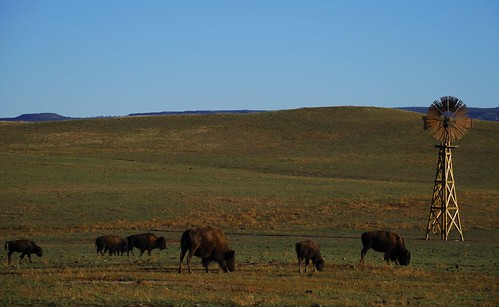
Sometimes thousands of the huge animals stampeded and would run madly across the plains, leaving the air full of dust clouds. The wagons had to stop; and there was always the danger that the herd would run right across their camps. Sometimes they would come so close to the wagon trains that it was difficult to keep the cattle and horses of the camp from mixing with the buffalo.
Continuing postings from Joseph Rich Porter Descendants and Ancestors by Bertha Cragun
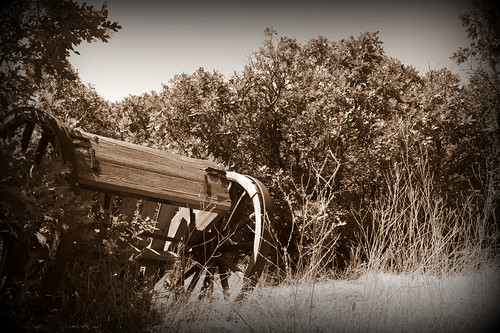 |
| Some Pushed and Pulled Handcarts |
The God of Israel is with us, and as we journey, as did Abraham of old, to a distant land, we feel that, like him, we are doing the will of our Heavenly Father and relying upon His word and promises and hope, and that the great Jehova is our God.
J R Porter, traveling in the Charles C Rich Company spent the winter before their trek across the plains at Winter Quarters, (now Florence Nebraska) on the west bank of the Missouri River. Even here education was important and a school was formed to teach the chidren. Great grandfather J R was too young to attend yet, but no doubt he found amusement in wathci such tings as the thousand of head of cattle taht were driven across the river. Good swimmers would climbe upon the backs of some of the strongest oxen andslapping them on the sides fo the tfaces wuld guide them into the current. Soon a string of animals would reach the other shore.
J R's mother Nancy, was not in good health. When they left Winter Quarters to cross the plains she was pregnant. With two children under 3 years old, traveling in a coverd wagon was very difficult, however, most of the Porter clan and the Rich clan were in the same company, paternal and maternal grandparents. the stron among them would help bear the trials of the weak.
Along the trail the children saw many animals, but the most exciting were the buffalo.
Sometimes thousands of the huge animals stampeded and would run madly across the plains, leaving the air full of dust clouds. The wagons had to stop; and there was always the danger that the herd would run right across their camps. Sometimes they would come so close to the wagon trains that it was difficult to keep the cattle and horses of the camp from mixing with the buffalo.
Continuing postings from Joseph Rich Porter Descendants and Ancestors by Bertha Cragun
Thursday, May 24, 2012
Porter Family Migration To America

Some information on the Porters is here in a continuing research story by William Arthur Porter Sr. It is an example of what it took to cross the Pond.
A Cragun grandfather, Patrick Cragun is said to have been a 17 year old runaway from Ireland, traveling at a similar age. He too was in danger of capture into servitude by the ships Captain. He too had issues on the sea. His was different in that his ship was a sailing ship and went 40 days with no wind. They ran out of food and water.
It appears the Porters had a lot in common one family to another, the thirst for freedom being one, the spiritual inclination being another.
I have found no connection to Sanford Porter and Peter Porter, but with some extra research may just find a common ancestor. More effort on that later, or you can do that. If you find the common ancestor, please report back.
From Mr Arthur Porter Sr.:
Many Porters immigrated to America before the revolutionary war. The U S Government census report of 1790 gives the first names of 575 heads of Porter families. Moreover, since several volumes of this census were destroyed by the British in the War of 1812, there are many names missing. No doubt there were many more than 575 Porter families in America by 1790.
Today there are tens of thousands of Porters in America. Many descended from the families that were here in 1790; many from those that have since come from England. The lives as led in the early day by those by those Porters were very similar: I have gathered data about the life of the First Porter immigrant. I refer tot he life data of Peter Porter, the family's first American Immigrant.
Peter Porter landed in Virginia in January, 1622. He was an English youth and, at the time, was just turning seventeen years of age. Peter had left England on September 21st, 1621, and so, had spent four months on the voyage. The trip across the ocean had been made in a small 40 ton vessel name "Tiger". On board the "Tiger" were 40 persons including several maidens for wives: the boat was in the charge of Captain Nicholas Elford.
His voyage across the ocean "was rough and beset with many dangers." As stated above, the "Tiger" had left England in September. She sailed in consort with a larger ship named "Warwick", a vessel with 160 ton capacity.
Copeland says, "the Tiger" became separated from the Warick and was driven by ill weather so far as the North Cape, fell into the hands of the Turks on her way, who took most of her supplies, and ll of her serviceable sails, out of their power, so as she escaped that danger, and arrived safely in Virginia with all of her people, two English boys excepted,for which the Turks g ave them two others, a French youth and an Irish. Copeland goes on to say, "Was not here the presence of God printed, as it were, in Folio, on Royale Crowne paper, and in Capital Letter? She arrived in January prior to the departure of "George". I have never been able to find out the nature of the strange accident that delivered them from the hands of the Turks.
Friday, May 18, 2012
Mocavo Genealogy Search Engine Found By Attending A Webinar
 |
| Everyone Likes To Share |
This is a search engine, like Google, except it is focused on filtering out the non genealogy sites.
You do have to register your email address and name, no big deal.
Here is a testimony they placed on their website. Dick Eastman
"All my future genealogy searches will start on Mocavo.com. I've been using the site for a while during its testing and have been very impressed. I suspect you will always have better luck searching for your own surnames of interest on Mocavo.com than on any other search engine."
I did a search on Mocavo for Patrick Cragun and found it only pulled up results that were directly related to Patrick. Pretty cool.
For me, it was one of the many jewels that came out of a webinar. It is truly fabulous how many people are willing to share tips and information.
There are many webinars coming up and I can't imagine you not finding one that you can benefit from.
The process is easy, register, and you will get an email with the link to login and watch the webinar.
You will need to turn your volume up on your computer or phone into a number you will be provided.
I go to the website you will find linked on the right side of this blog: http://blog.geneawebinars.com/p/calendar.html Here is a pretty good directory of upcoming webinars.
For example if you have an Ancestry.com account you might benefit from this webinar:
Wednesday, May 23 8:00pm
Your Unofficial Guide to Ancestry.com: Tips, Hints and Hacks for Finding Your Ancestors
Always double check the time zones:
I think this is the next one I will attend: Wednesday, June 20 2:00pm
Marriages and Anniversaries. Mining newspapers for engagements, marriages, anniversaries.
What would be cool is if someone could hold a webinar on one of my ancestor lines: Cragun, Porter, Bingham, or Salinas.
Wednesday, May 9, 2012
Cragun, Bingham, Porter, & Salinas Research Blogs
 Think of all the genealogy information hiding in plain site, deep within the covers of books and publications in libraries like this.
Think of how much time is spent searching them.
Think of how much data has been stored on microfilm, with libraries such as the Church of Jesus Christ of Latter Days Saints Salt Lake City Family History Library shelves, and in the granite vault.
Genealogy is even more hip now, people are catching the spirit. Some youngsters are choosing Genealogy over video games.
The search is on, and you might be a part of it.
I don't want you to waste your time duplicating someone else's research. My main family lines are in the title of this post. If you are from the same ancestors, you are welcome to join with me in focusing on common family lines.
If you are a Cragun Bingham Porter or Salinas lets get together and attack both our dead ends and our fables.
I'm not interested in credit or being possessive, I'm interested in results.
So join me. My sister Nancy has been awesome. Nancy if you have things to post, I welcome you to be a contributor. Other cousins known and unknown also. If you aren't related, get with the concept on your family lines. If you think you can't do this you are wrong, anyone can do this if they can do email. It's about that easy to blog. We are wrapping up the last of a four session series of training. We hope to do more of these and expect that will happen.
I have setup four research blogs. Cragun is here Porter is here Bingham is here and Salinas is here.
Today I was with a new Family History missionary today at the Salt Lake City Family History Library. Her ancestors came to Australia from England. We were able to find real good copies on microfilm of births in the county of England with children having the same last name of that ancestor. The first thing I instilled within her in her training was to use research logs to record the results. As I get more focused to being back on my research I will post the research I do on the research blog of that family. Back to the concept of why duplicate each others research. There is so much not yet indexed, on microfilm, in books, in journals, and in family records. I sincerely believe in, and want to be a promoter of families working together so they don't waste time duplicating each others work.
I guess that makes me a Mormon Evangelist.
Monday, May 7, 2012
Origon of The Porter Family
 |
| William The Conqueror |
William the Conqueror became King of England and was known as William the First. Succeeding William, The First was his son, Henry, known as Henry the First, King of England. In 1120, Henry, the First appointed the son of William de la Grande as his "Grand Porteur". It is from this appointment that the name Porter was derived. The appointee became known as Ralph Roger Porter. He held the tile of "Grand Porteur" from 1120 to 1140.
The name Porter is derived from the French word porte, Latin Porta, a gate and a gate opener or gate protector in the same sense as John 10:3, "to him the porter openeth" It does not mean a Procter in the sense of a burden bearer.
The Kings Castle was surrounded by a moat. Over the moat at the castle's entrance was a gate. This gate could be closed by pulling it up as a draw bridge. Whenever the visitors wished to enter the castle they were required to ring the bells at the entrance and if they were eligible to enter the "Grand Porteur" or his helpers would lower the gate bridge across the moat and the visitors could then enter the castle.
The above circumstances led to the design of the Porter Coat-Of-Arms. By William Arthur Porter Sr.
Wednesday, April 4, 2012
Joseph Rich Porter Part 2
This is a continuation of the Joseph Rich Porter Story by his grandaugther Bertha Cragun Part 1 click here

J.R. was 3 years old when he, his parents, brother Sanford Jr., and most of his extended family began their journey westward. A most moving description of how the Porters would live for the next few years comes from the "Memoirs of John R. Young" "I remember hearing the ringing voice of President Brigham Young standing early in the morning in the front end of his wagon, he said"
"Attention, the camps of Israel. I propose to move forward on our journey. Let all who wish follow me; but I want none to come unless they will obey the commandments and statutes of the Lord. Cease, therefore, your contentions and backbiting, nor must there be swearing and profanity in our camps. Whoever finds anything must seek diligently to return it to the owner. The Sabbath Day must be hallowed. In all our camp, prayers should be offered up both morning and evening. If you do these things, faith will abide in your hearts; and the angels of God will go with you, even as they went with the children of Israel when Moses led them from the land of Egypt" Telling the story in retrospect, John Taylor described it this way: "We outlived the trying scenes. We felt contented and happy. The songs of Zion resounded from wagon to wagon, from tent to tent, the sound reverberated through the woods, and its echo was returned from the distant hills; peace, harmony, and contentment reigned in the habitations of the Saints. The God of Israel is with us, and as we journey, as did Abraham of old, to a distant land, we feel that, like him, we are doing the will of our Heavenly Father and relying upon his word and promises; and having his blessing, we feel that we are children of the same promise and hope, and that the great Jehovah is our God.
J.R. and his family spent the next winter at Winter Quarters Missouri, on the west bank of the Missouri river. Even here education was important and a school was formed to teach the children. J. R. was too young to attend yet, but no doubt he found amusement in watching such things as thousands of head of cattle driven across the river. Good swimmers would climb on the backs of some of the strongest oxen, slapping them on the sides of their faces would guide them into the current. Soon a string of cattle would reach the other shore.
J.R.'s mother Nancy, was not in good health. When they left Winter Quarters to cross the plains she was pregnant. With two children under 3 years old, traveling in a covered wagon was very difficult. However, most of the Porter and Rich clans were in this same company including maternal and paternal grandparents. The strong among them would help bare the trials of the weak.
Along the trail the children saw many animals, but the most exciting were the buffalo. Sometimes thousands of these huge animals stampeded and would run madly across the plains, leaving the air full of dust clouds. The wagons had to stop: and there was always danger that the herd would run right across their camps. sometimes they would come so close to the wagon trains that it was difficult to keep cattle and horses from mixing into the buffalo herd.
On September 4, 1847, as they approached the Sweetwater river in the Mexican territory, (Now Wyoming) Nancy went into labor and another son, John President Jr. was born. John was named after his maternal grandfather.
With John Presidents birth, both gladness and sadness came at the same time. There had been many cases of mountain fever. J.R's grandmother, Nancy Rich, had to give up helping with the birth of the new baby and go to bed with distressing pain in her back, bones, and joints. It was attended with hot flashes, cold chills, then hot flashes again. She had contracted mountain fever.
The decision to keep moving was especially difficult for Charles C Rich, the Captain of the company. His mother was at deaths door and his sister was newly confined. The miserable condition of the sick having to ride over mountain and boulder in a wagon bed seemed inhuman, but he had no choice and the company urged their animals and wagons on. In spite of sickness, new born babies, and the myriad other things that plagued the company, the feel of winter was in the air and they knew they must not stop or they would become snowbound in the mountains, never reaching their destination. The rugged mountains and poor trails they had yet to cross would be as bad or worse than any road previously traveled.
to be continued.
Wednesday, March 28, 2012
Joseph Rich Porter: Part 1
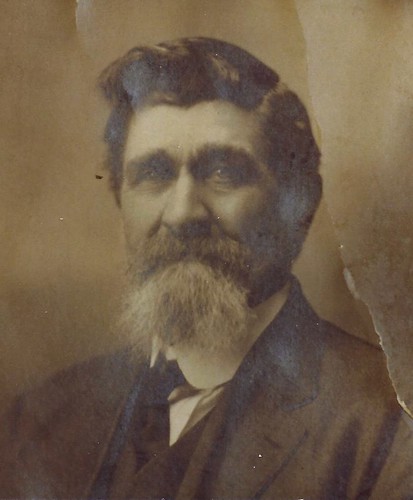
By Bertha Cragun: Granddaughter: deceased: From her records
Joseph Rich Porter came to the valley of Porterville as a young man of eighteen. Within a year he became the first school teacher. He shared this responsibility with a young woman, Anna Wood for two years, then she moved away. He was the only teacher many of the children from the Canyon Creek district ever had. The area encompassed from East Canyon to Richville.
He was one of those early pioneers who exerted influence on the people of Porterville and helped shape their destiny for many years. He tried to instill in his students a desire to do their best, a love of community, country, and church, and a belief in themselves.
He served the people of East Porterville as their Bishop for twenty years, and throughout life filled many church related positions. He was active in the political arena all his adult life. He served as selectman (a Presidential appointment) in the Territory of Utah, County commissioner after Utah became a State, Probate Judge, and Superintendent of Schools. He was elected a member of the State House of Representatives for three different terms, and a chaplain of that body for two years.
He helped organize a debating society, a drama group, and was a trustee of the ZCMI in Morgan. In addition to all this, he farmed 50 acres of fertile land.
His first wife died soon after the birth of their first child, a daughter. Six years later he married Electa Elizabeth Porter. They had eight children.
He was often called J.R. Joseph Rich was born 29 March 1844 in Charleston, Lee County, Iowa. Just two months before J.R.'s birth, Joseph Smith, the spiritual leader-prophet of his family and of The Church of Jesus Christ of Latter Day Saints had been murdered and the entire L.D.S. community was in chaos and distress.
John President Porter and Nancy Rich Porter, his parents were now placed in the ambivalent situation of extreme sadness at the martyrdom of their prophet and the anticipated joy of the arrival of their first child.
Their prophet had been named Joseph and Nancy's father was Joseph Rich. A fitting name for their new son was Joseph Rich Porter.
For this family, as with all the Latter Day Saints, the next two years were filled with turmoil, tremendous sadness, and preparations to go westward to some unknown destination. Yet, too, there were times of infinite spiritual uplift and happiness, brotherly affection and the togetherness that only trouble and persecution will bring about.
In September 1845 the Saints were scattered and persecuted. Many homes were burned and their occupants driven out into the winter cold.
When the Sheriff took a determined stand in favor of the Saints he was arrested and charged with the murder of a mobber. Violence against the "Mormons" was permitted to go unchecked. Governor Ford had promised and pledged his word that the murderers of the Prophet and his brother, Patriarch, Hyrum Smith, would be brought to justice. The citizens of Warsaw, Illinois, where the murders took place, informed the Governor in no uncertain terms that they would not support him. They were to have their own kind of mock court. Similar stand in opposition to the trial of the murders, but expelling the "Mormons" from the state. Governor Ford, by his subsequent actions, acknowledged his inability to handle the situation with fairness and impartiality.
For about a year the people of Nauvoo had been crossing the river into Iowa to escape the persecutions going on in Illinois. Those who could find room took these exiles into their homes, as did some of the Porters, but most of the people camped at a place called Sugar Creek. The weather was inclement and extremely cold, people were without proper shelter, with only wagons or tents to protect them from the elements.
J.R. was three years old when he, his parents, brother Sanford, and most of this extended family began their journey westward.
To be continued
Tuesday, March 27, 2012
Is It TIme To Blog For Family History Purposes?
Please not as you read this article that I invite you to have me link to your blog, or to write an article as a contributor on this blog.
 The era of wasting time duplicating each others research is, thankfully, coming to and end.
So is that interesting story being lost in your file cabinet a sad fact that can change.
Sure you can be the proud finder of information and keep it secret if you want, but I believe you will be persuaded that COLLABORATION is a winning concept.
Time and effort is a valuable resource. By collaborating we give ourselves the gift of each others time and effort. It's a win win concept.
There are going to be numerous vehicles for those of us, especially for those who have limited time to spend doing research.
One of those I wrote about a few days ago, is SharingTime
I wrote about this concept in the article inspired at the RootsTech conference: Click Here
Now I introduce another vehicle: Your Blog About Your Family.
To illustrate, three of my four grandparents were Mormon pioneer families: Cragun, Porter, and Bingham. Jointly they have thousands of descendants. You might think there are stories and facts easily found on line, provided by their loving descendants. Nope, if you do a google search for information on these 3 lines you find a dominance of commercial sites with a narrow slice of duplicate information and information of limited value.
However if you are searching for Patrick Cragun, for example, besides duplicate information you now find on page 1, near the top, this blog - my blog. I will explain at the end of the article why I have attained this type of search results so quickly. One reason is that it is a Google blog. Also, almost every result out there is a website, not a blog. Search engines like blogs better than websites. More on that later.
If you blogged, your site can be found by Google and other search engines. There are many benefits to that. One being unknown cousins can find you.
As important as being found is the content posted. You will care more about the content than a business will. You can post more depth of stories. You can post documents. These documents can link to the new FamilyTree that will be awesome and free. You can update and publish your research instantly. It is likely that your content is important and relevant. Search engines analyze this. Every time you update your blog with new content you automatically tell the search engines to come to your blog and copy (index) the information you just added.
The article, the photo clip above, which Google has already delivered to page 1 was an article I posted yesterday. No other sites on page 1 have fresh information on them. Most of them have far less information about Cragun. Because my content is fresh, and because I am posting several times a week I am getting priority in the searching process. The more I publish the stronger this blog will get.
In the spirit of collaboration, every that site I find that posts family history information relating to my ancestors will get exposure from my blog. I will at least provide a link to your blog, and perhaps an article. We can be a reference point to each other, at least from me to other sites. As more and more people do this with their names, the more positive results they will have.
Patrick Cragun was an immigrant. Every Cragun in the United States is likely a descendant of his. He had 9 children. Some live in the midwest nearer where he died than I do, making it more convenient for them to check out some local sources. If we are all posting our research live and cooperating or collaborating greater depth will happen in discovering our ancestors.
I am thinking of the depth of discovery the popular show, "Who Do You Think You Are" garners. Of course they have resources we don't have. Correction, they have the resources we don't have as individuals. But if all the Craguns, the Binghams, the Porters, or your ancestors were collaborating, we too could accomplish amazing things as do they.
Writing a blog such as this is not difficult. It does have a small learning curve. Setting it up only takes minutes. For some of you this is all you need to know. For others I will soon write an article on how to set up and publish a Google blog.
Final point. I hate to say this, but I know most of you won't do a blog. You could, you should, but you won't.
So here is my offer to those of you who have common ancestors to me that won't do what I propose. You can post and get author credit for posting on this blog.
My blog can become our blog. That makes it easy. Contact me if that interests you and we can discuss the details. larry@cragun.net Check my tree out by clicking here. We just might have common ancestors. Lets make more progress by collaborating.
A few reasons what I propose brings you up to the top on Google and other search engines:
Google makes sure it captures all new information on its own blog network. That's why a Google blog.
- Blogs have technology that signals the search engines to come and get the new posts.
- Blogs are easy for the search engine to analyze as to the what the content of the blog really is about.
- There are things you can do to an article to make search engines give it priority on the results.
- Blogs are so simple to setup, write on, and to customize.
- By writing multiple articles on a topic or certain topics, such as your family names you improve your results. These are done naturally and creating what is called natural search engine optimization without any gimmicks.
Wednesday, March 7, 2012
Photograph Tips From An Experienced Detective

And that would be tips from my sister; Nancy Cragun Day
The photo is of a future genealogy detective, not Nancy.
Nancy is a valuable genealogy detective for our families family history.
Seriously, Nancy has taken upon herself the arduous task of going through all of the family history and photographs our parents left upon their passing away.
 |
| Porter Photos from Nancy Day Flickr account |
TIP: Make that cool photo one for history.
So many people are posting photos on Social Sites, taken with phones. These are forever lost to future generations. What a treasure trove these photos could become.
TIP: Put a photo with an obituary. Another sister, Peggy told Nancy that if she had seen how much Nancy and others had used printed obituaries in their research she would have published our fathers photo.
TIP: Always take the effort to put names, dates, places on the back of the photo. She has seen our family photos with vague or no writing on the back. Vague such as grandma (whose Grandma?) and cousins (which cousins?). Bert (which Bert?). In her own case she has a photo with one of her sons. She thought she would always recognize her sons. Guess what? They looked the same as kids. She has a photo of herself, she thought, at a local radio station party. She had to research the local newspaper to figure out how old she was. You took the photo, identify it. It's important.
Tuesday, March 6, 2012
Are We Cousins? Just Asking!

Monday, February 13, 2012
Edward Rich South - A Persuasive Man
 |
| Edward Rich South |
When I publish my grandmother, Nancy Athena Porters story, you will see another evidence of Edwards persuasiveness.
This first trip to Omaha was a great thrill for Edward. In 1896, at age 27, he was appointed Deputy Sheriff of Rich County, which brought many more exciting experiences. One criminal was caught by Edward's efforts, then tried, found guilty, and sentenced to prison. Upon his release, the criminal boasted that he was going to kill Edward. Due to this malcontent cantankerous disposition, many people believed this to be the end of Edward. They inevitably met one day when Edward was at a popular eating establishment, in a small village in the county. The criminal pulled out his gun and ordered Edward outside. He then commanded Edward to get inside a buggy. As they rode away, Edward's salesman ability went to work as he talked to the man, finding out how much he disliked the stigma of being a criminal and how people shunned him. The felonious man then said he would kill, if necessary, for a thousand dollars. Edward pulled out his wallet and offered the criminal half of what he had in it. This softened the man, with him commenting that this was the first time in his life that anyone had given him anything. Edward then inquired if the criminal still liked horses; the reply was, "yes." Edward then suggested that the man get a job driving horses. At the end of the talk, they were friends
A complete story on Edward is here: Edward Rich South
Friday, February 10, 2012
We Are All Stuck on Some Names Aren't We?
 |
| STUCK? |
Here are some examples of where I am stuck:
In my Porter line:
William Shaw married Martha Pool - Who were Martha's Parents?
Neil O'Neal Married Agnes or Alice - Last name would help & What
about her parents?
In my Bingham line:
Sarah Rebecca Adams, born 1800 - I don't have info on her parents either.
In my Cragun line:
I'm Stuck on Sarah Catherine Plank.She lived in the late 1700's early 1800's.
Andrew Mauer married Barbara and that's all I know.
Alexander Osborne married Martha, and that's all I know.
Charles Abbey married Fannie - who were both of their parents?
and of Course Patrick Cragun could have left us better info all around. I
would appreciate as much as possible as this original Tea Partier. (as in
Boston Tea Party)
Thursday, February 9, 2012
Call For Help: Info on Nancy Athena, Electa Elizabeth, or Joseph Rich Porter
Dear Visitors,

I am writing my grandmother Nancy Athena Porters, life history. It will be in the form of a printable e-book. Her parents were Joseph Rich Porter and Electa Elizabeth Porter.
Grandmother was born in 1886 in Porterville and died in 1930 in Burley Idaho
I would appreciate if you have any relevant information that I could include.
Porter Family Name Origination

The Porter family name was originally adopted from the original bearers’ occupation. Porter was an occupational name for a gatekeeper or watchman deriving its origin from the Old French word “portier”, meaning “doorman”.
In the royal castles, and in some monasteries, the office of Porter was usually hereditary, and lands and privileges were usually connected to the position.
Spelling variations include: Porter, Pawter, Poreter, Portar and others.
First found in Kyle where Radulfus the porter witnessed the gift of the church of Cragyn (Craigie) to the monastery of Paisley in 1177.
Some of the first settlers of this name or some of its variants were:
Roger Porter, who settled in New England in 1638; with his wife and four children; Robert Porter settled in the Barbados in 1676 with his two children.
(Swyrich Corporation 2006)
Subscribe to:
Posts (Atom)