My serving here in Salt Lake City Family and Church History Headquarters mission has been a chance to feel a greater love and respect for my pioneer ancestors. The community here emphasizes it more. There is the Pioneer day parade and celebration. Our local youth did a Pioneer Trek this summer. It's talked about more and I appreciate it.
In doing my genealogy I have learned how Elisha Cragun found the church not long after his wife and 23 year old daughter died. He gave up his plantation and slaves and moved to Nauvoo where the church members were gathering. He and 4 of his childrens families went with him. One son, ended up in Minnesota while Simeon Cragun and two sisters headed west. Elisha didn't make it, he died in Winter Quarters. Great Grandfather Simeon and family were the first to settle in Pleasant View, Utah.
Sanford Porter was my first ancestor to join the church, not long after it was founded. He had an amazing, actually several amazing experiences leading up to his joining the church. Sanford Porter had two sons that are great grandfathers of mine: John President Porter and Lyman Wight Porter. Lyman Wight was named after one of the missionaries that taught Sanford. The Porters traveled in the Charles C Rich pioneer company, and it's not surprising one of the Rich girls married John President.
My Bingham ancestory has a touching situation. Erastus had 10 children and lived in England. He and one daughter joined the church and came to America and were pioneers. They seemed to have had to give up their family to come as my grandmother records they never saw or heard from her mother and siblings again.
The Porters settled in Morgan County Utah. You may be related to some of them: Joseph Rich Porter, Marlow Rich Porter, Bertha Maria Porter, Joseph Irvin Porter, Mary Viola Porter, Nathaniel Victor Porter, Nellie Electa Porter, or Eleca Elizabeth Porter. Electa is my great grandmother, the others her siblings.
My great grandfather Simeon Cragun had a son, Simeon who is my grandfather. His first wife died. His second wife Blanche Bingham is my dads mother. So my Cragun and Bingham lines come together through this marriage.
I'm proud of my pioneer heritage. I'm grateful my ancestors found the church so I could be a part of it and its blessings from my youth.
Showing posts with label Bingham. Show all posts
Showing posts with label Bingham. Show all posts
Saturday, September 15, 2012


Thursday, August 2, 2012
Lorenzo Freeman Bingham as told by his daughter Blanche
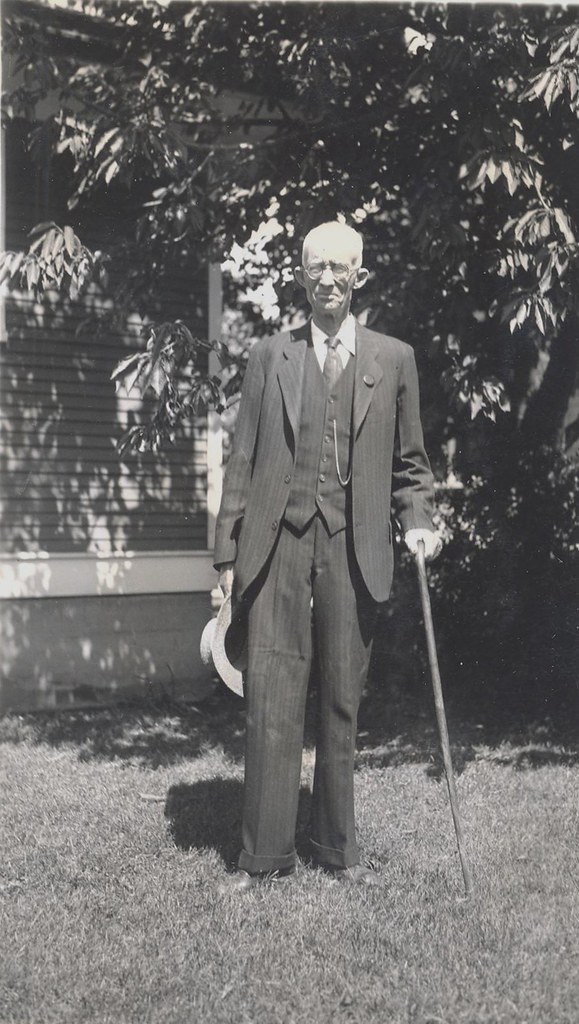 Blanche Bingham is my dads mother, my grandmother. I share this story with you and it points out a couple of important things. 1- Even a short story left for posterity has value. 2- This article is now linked to Family Search Family Tree for anyone to find. Until now it has been in a file my mother left to me, not to be seen unless you had the file.Other information is in the same hidden state. Blanche is the daughter of Lorenzo, she is my grandmother. He has 2 grandchildren still living. I copy it exactly and have not corrected any grammatical errors.
 My father was a very kind man. He always could find time to help a neighbor. After working from 10 to 14 hours a day. There was no union at the time and there was street cars and horses and carriages. So most of the time they could ride as far as the street car went and then walk. My father was a lovely tenor singer. When we children were little he would sind, or read to us and and one or the other ofus would keep him busy getting drinks of water. It didn't matter how tired the poor dear was he would wait on us and I know he wasn't so thirsty as we enjoyed him to wait on us. He always fixed our shoes by half soling them. When we had company mother was getting dinner he would tell that what a good dumpling she could make. He liked to tease my mother. She would tell him after company was gone that she would like to see and taste his dumplings. He would just laugh, put the smallest child on his knee and sing funny songs to them. He loved the church but never went very often but always upheld the principles of the church. I think on account of his smoking his pipe that kept him from going to church; and maybe his work. Most of the time he worked as a laborer. He cut annd put up ince for the summer. That was the only way at that time to have ice in thie summer. My father said that that when he was a young man that there wasn't money for everything so they would all take soemthing they had grown such as squash or a pples or potatoes or onions to pay ones that furnished music to dance by. The dances were always church dances and they would dance all night or until 4 o'clock in the morning every one turned out --old and young-- they would bring their babies, put them to bed in the windows or in corners on chairs. single ones came on horses with a sack of whatever he had and the families came in wagon and buggies wrapped up in quilts and hot rocks and straw. My father said next morning Grandpa would call them to get up to do the chores and he owuld say he was so sleepy and grandpay would say, "those that danced had to pay the fiddler", for his to get up. Father was a man of love for every one and he had charity. It's a shame that he hadn't worked on genealogy for as soon as he talked to anyone he'd ask them who their parents were. He would laugh and tell them he knew them very well and then he would have a long talk about some of the fun things they had done. He always enjoyed living over his childhood days.
Thursday, July 26, 2012
The Definition of Who Is Your Ancestor
Many may know that The Church of Jesus Christ of Latter Day Saints is very supportive in Genealogy - Family History Service. This work is core to our understanding that families are forever. We are not only genetically tied to our ancestors, we are eternally tied to them. How cool is that? Personally, there are several of my ancestors whom I want to know better. Each story and fact that I uncover about them adds to that hope for the future. (I do want it to wait awhile though, I have many here to share time with.)
Our Temples, and the promises we make there are part of that eternal quest.
Today I fielded a call from Wyoming where a person asked, "what is the definition of an ancestor whereby I am to do their family history? They were told by one, just go up your lines.
That's not correct. If I only went up my direct lines, I would have nothing to do but to learn Spanish and crack brick walls. Three of my lines, Cragun, Bingham, and Porter have been researched by faithful genealogist from way back. The Bingham line is back to the 1500's. These are Pioneer lines. People have worked them hard. There are many records they have provided. My other grandparent, Salinas was from Mexico. The records are in Spanish. I don't read Spanish.
The correct answer that is Church policy is easy to understand: Are you blood related? Think of it another way, do you have the same genetic parenthood? If I have a common grandmother or grandfather to another, we are then going to blood related, which can be identified genetically. Church leaders recommend concentrating family history research and temple work on our own ancestors. That, by the way, is one of the sobering facts about DNA. I have my ancestors DNA as a part of mine. You my cousins with the same grandparents have that DNA also. It is remarkably remarkable.
Do you think the creator of all this is in charge? DNA science alone testifies to me of the reality of a Loving God. An accident, I think not. One of the least interested in Church was a man I knew well. He was an Ophthalmologist, an eye surgeon. He couldn't be bothered with religion. He confused me one day as I entered his office. An old Indian man was walking out the door to his car. The Dr. grabbed me by the arm, took me to the door, and pointed at him. "Do you see that man", he asked? Yes I said. "Two weeks ago he was blind, he was blind until I operated on him." That is awesome I said. "It wasn't me. I know it wasn't me. There was something about the operation that I knew I was being guided by a higher being." Wow! And no time or interest in God.
Back to who is my ancestor in LDS policy. An example of one who is not my ancestor for our church responsibility would be the wife of my great grandfathers son. That then would include her parents and grandparents, and up the tree. Their children are my blood relatives.
That's the good news. Yes, there is a lot of research to do.
Our Temples, and the promises we make there are part of that eternal quest.
Today I fielded a call from Wyoming where a person asked, "what is the definition of an ancestor whereby I am to do their family history? They were told by one, just go up your lines.
That's not correct. If I only went up my direct lines, I would have nothing to do but to learn Spanish and crack brick walls. Three of my lines, Cragun, Bingham, and Porter have been researched by faithful genealogist from way back. The Bingham line is back to the 1500's. These are Pioneer lines. People have worked them hard. There are many records they have provided. My other grandparent, Salinas was from Mexico. The records are in Spanish. I don't read Spanish.
The correct answer that is Church policy is easy to understand: Are you blood related? Think of it another way, do you have the same genetic parenthood? If I have a common grandmother or grandfather to another, we are then going to blood related, which can be identified genetically. Church leaders recommend concentrating family history research and temple work on our own ancestors. That, by the way, is one of the sobering facts about DNA. I have my ancestors DNA as a part of mine. You my cousins with the same grandparents have that DNA also. It is remarkably remarkable.
Do you think the creator of all this is in charge? DNA science alone testifies to me of the reality of a Loving God. An accident, I think not. One of the least interested in Church was a man I knew well. He was an Ophthalmologist, an eye surgeon. He couldn't be bothered with religion. He confused me one day as I entered his office. An old Indian man was walking out the door to his car. The Dr. grabbed me by the arm, took me to the door, and pointed at him. "Do you see that man", he asked? Yes I said. "Two weeks ago he was blind, he was blind until I operated on him." That is awesome I said. "It wasn't me. I know it wasn't me. There was something about the operation that I knew I was being guided by a higher being." Wow! And no time or interest in God.
Back to who is my ancestor in LDS policy. An example of one who is not my ancestor for our church responsibility would be the wife of my great grandfathers son. That then would include her parents and grandparents, and up the tree. Their children are my blood relatives.
That's the good news. Yes, there is a lot of research to do.
Friday, July 13, 2012
Some Great Bingham Posts, Recently Up On Bingham Family Research Blog
I recently had a fun day posting documentation and stories about my Bingham ancestors on the Bingham Family Research Blog. I then linked them to FamilyTree. Here are the links and titles of those postings: ![]()

Kent Smith: Husband to Blanche Bingham Funeral Program
Emma Adams White Guthrie 96 Bithday Announcement - Newpaper with photo
Lorenzo Freeman Bingham Birthday Announcement Newspaper with photo
Erastus Bingham = My Great Great Great Grandfather
From Blanche Rebecca Bingham 2 handwritten stories
Friday, May 25, 2012
Mormon Pioneers, Porters, Binghams, and Craguns Included People Of Great Faith
Pioneer John R Young quotes in his journal, "We outlived the trying scenes. We felt contented and happy. The songs of Zion resounded from wagon to wagon, from tent to tent, the sound reveberated through the woods, and its echo was returned from the distant hills; peace, harmony, and contentment reigned in the habitations of the saints.
The God of Israel is with us, and as we journey, as did Abraham of old, to a distant land, we feel that, like him, we are doing the will of our Heavenly Father and relying upon His word and promises and hope, and that the great Jehova is our God.
J R Porter, traveling in the Charles C Rich Company spent the winter before their trek across the plains at Winter Quarters, (now Florence Nebraska) on the west bank of the Missouri River. Even here education was important and a school was formed to teach the chidren. Great grandfather J R was too young to attend yet, but no doubt he found amusement in wathci such tings as the thousand of head of cattle taht were driven across the river. Good swimmers would climbe upon the backs of some of the strongest oxen andslapping them on the sides fo the tfaces wuld guide them into the current. Soon a string of animals would reach the other shore.
J R's mother Nancy, was not in good health. When they left Winter Quarters to cross the plains she was pregnant. With two children under 3 years old, traveling in a coverd wagon was very difficult, however, most of the Porter clan and the Rich clan were in the same company, paternal and maternal grandparents. the stron among them would help bear the trials of the weak.
Along the trail the children saw many animals, but the most exciting were the buffalo.
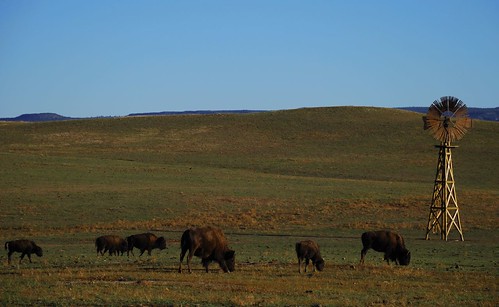
Sometimes thousands of the huge animals stampeded and would run madly across the plains, leaving the air full of dust clouds. The wagons had to stop; and there was always the danger that the herd would run right across their camps. Sometimes they would come so close to the wagon trains that it was difficult to keep the cattle and horses of the camp from mixing with the buffalo.
Continuing postings from Joseph Rich Porter Descendants and Ancestors by Bertha Cragun
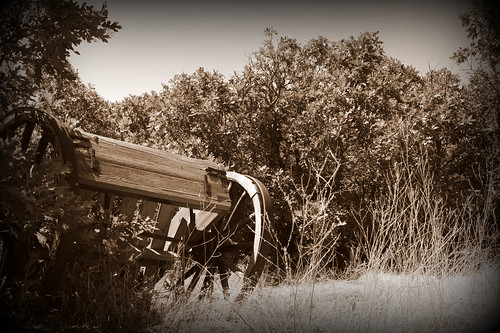 |
| Some Pushed and Pulled Handcarts |
The God of Israel is with us, and as we journey, as did Abraham of old, to a distant land, we feel that, like him, we are doing the will of our Heavenly Father and relying upon His word and promises and hope, and that the great Jehova is our God.
J R Porter, traveling in the Charles C Rich Company spent the winter before their trek across the plains at Winter Quarters, (now Florence Nebraska) on the west bank of the Missouri River. Even here education was important and a school was formed to teach the chidren. Great grandfather J R was too young to attend yet, but no doubt he found amusement in wathci such tings as the thousand of head of cattle taht were driven across the river. Good swimmers would climbe upon the backs of some of the strongest oxen andslapping them on the sides fo the tfaces wuld guide them into the current. Soon a string of animals would reach the other shore.
J R's mother Nancy, was not in good health. When they left Winter Quarters to cross the plains she was pregnant. With two children under 3 years old, traveling in a coverd wagon was very difficult, however, most of the Porter clan and the Rich clan were in the same company, paternal and maternal grandparents. the stron among them would help bear the trials of the weak.
Along the trail the children saw many animals, but the most exciting were the buffalo.
Sometimes thousands of the huge animals stampeded and would run madly across the plains, leaving the air full of dust clouds. The wagons had to stop; and there was always the danger that the herd would run right across their camps. Sometimes they would come so close to the wagon trains that it was difficult to keep the cattle and horses of the camp from mixing with the buffalo.
Continuing postings from Joseph Rich Porter Descendants and Ancestors by Bertha Cragun
Wednesday, May 23, 2012
England And Wales Births Deaths Marriage on line Cragun Bingham Everyone
 |
| British Houses Of Parliament |
One class was about the awesome site FREEBMD. In 1837 the British Houses of Parliament passed laws requiring all births, marriages, and deaths be recorded. That information was available in books you could search until a few years ago. If you had an ancestor that were either born, married, or died in England or Wales between the years 1837 and 1946 those records were made public and you could have ordered certificates to document those events.
They were then removed and were no longer public.
Once again that amazing spirit (some know as the spirit of Elijah) caused good people to, at their time and expense, arrange to index and put on line those records. The project is an ongoing project, the aim of which is to transcribe the Civil Registration index of births, marriages and deaths for England and Wales, and to provide free Internet access to the transcribed records. It is a part of the FreeUKGEN family, which also includes FreeCEN (Census data) and FreeREG (Parish Registers). To search the records that have so far been transcribed by FreeBMD click on the Search button.
If you had an ancestor that were either born, married, or died in England or Wales between the year so much of the project is complete you will likely find your ancestors. It is an important site.
I have Porter, Bingham, Cragun, and many other lines from there and I am beginning to do research on this website.
You might try it also, it's easy to use.
Tuesday, May 22, 2012
Erastus Bingham Grandfather and Pioneer

I have really begun to appreciate what our pioneer ancestors went through. My fathers mother, Blanche Rebecca Bingham, is a great grandaughter of Erastus Bingham.
Reading this gives me the chills.
Life History of Erastus Bingham, Sr.the son of Sarah (Sally) Perry [and Elisha Warner Bingham], who was the daughter of Capt. David Perry [and Anna Bliss]
Erastus Bingham was born in Concord, Essex County, Vermont 12th March 1798 and baptized 11 November 1833, at St. Johnsburg, Vermont, a direct result of early day missionary work in New England. With his wife, Lucinda Gates Bingham, his eight children and Willard Snow, Joel Harvey and their families, and others, he traveled to Far West, Missouri, via Kirtland, Ohio, arriving in Far West the 4th of November 1836.
After the Extermination Order of Governor Boggs, the Bingham family moved to Hancock County, Illinois, on a rented farm between Carthage and La Harpe, remaining here from April 1839 until the Spring of 1845.
According to family records, the martyrdom of the Prophet and his brother, Hyrum, caused great concern to the Bingham family, and like other Saints in the Carthage area, desired to situate closer to Nauvoo. It is evident from circumstances and conditions at this time that a Mormon family was in grave danger of being mobbed. With this and the fact that the Brethren were pressing a speedy completion of the Temple, it gave motive enough for Erastus to move his family to a spot near er Nauvoo.
In the spring of 1845 Erastus bought a farm of 160 acres about 20 miles West of Nauvoo, Illinois, which was extensively cultivated during the spring and summer. After the crops were all harvested, he labored night and day with others to complete the Nauvoo Temple. (Bingham, Belnap, and Scoville, Life of Erastus Bingham and Family, p. 8.)
Little is known of the activity of the Bingham family while at Nauvoo except evidences of their assistance with the Temple.
In January 1846, the family records show that one of Erastus' sons, Erastus, Jr. , was chosen to go with an advance group "to make roads, build bridges, and plant crops at various points", assisting those to follow in the general migration from the city.
The remainder of the Bingham family followed on the 6th of May, (the 160 acre farm, improvements, etc., were sold for enough 'to buy a team of horses'.) and continued to Mt. Pisgah, Iowa, arriving in mid-summer.
From here we pick up the movement of the family "in a company of about 200 wagons in command of Bishop (George) Miller. Erastus Bingham was made Captain of one hundred. They traveled Westward until they reached Council Bluffs, Iowa. Prior to their arrival at Council Bluffs, the United States Government asked for 500 volunteers to fight in the war with Mexico. Two sons and a son-in-law of Erastus Bingham volunteered, Erastus, Jr., Thomas and Elijah Norman Freeman, husband of his (Erastus') daughter, Mary; and they were recruited in the Mormon Battalion in Council Bluffs, Iowa.
(Erastus, Jr., who had been chosen for the advance company from Nauvoo had shortly before joined his family and now enlisted with the Battalion. He traveled as far as Santa Fe with the main group and under orders from Col. P. St. George Cooke retired to Pueblo, Colo., remaining there to give assistance to the sick during the ensuing winter. He entered the S.L. Valley July 29th 1847 with the "Mississippi Co." and the others from the Battalion who wintered at Pueblo. On August 26th he set out with the Brigham Young Company returning to Winter Quarters and met his family, on the Sweetwater, returning with them to the valley.
Thomas Bingham, Erastus' third son was unable to continue on to California with the Battalion and wintered in Pueblo, Colo. The strenuous march to Santa Fe caused a reoccurrence of the ague and fever. He, with his brother Erastus, Jr., arrived in S.L. Val1ey on July 29, 1847.
Elijah Norman Freeman married Erastus' eldest child, Mary, in Nauvoo in 1843. According to Church Chronology, page 32 by Andrew Jensen, "He was buried, four miles south of Secora on the Rio Grande," having succumbed to the strain and hardship of the march with the Battalion to San Diego.) Erastus Bingham had the care of the families of these volunteers. After resting a few days until two companies were organized, one called Brigham's Co. , and the other Heber's Company, they started traveling westerly according to the directions of the Twelve Apostles . . . . They traveled up the Platt River until they came to Loop Fork, Nebraska, where they overtook Bishop George Miller and his company. When they arrived at Loop Fork, a messenger on horseback brought word from the president of the Twelve, Brigham Young, that they should not venture farther for fear of deep snow or hostile Indians, but should locate a good camping ground for the winter.
The captain, Bishop Miller, was not in favor of obeying this order. He was anxious to push on, as the prospect of several months delay in the journey was not a pleasing one.
They remained three days considering and discussing the problem. At this juncture a number of Indian chiefs of the Ponca Tribe passed by on their way home from an Indian Council. They were very friendly and invited the travelers to go with them to their camping ground to a place called Swift Water near the Missouri River about 150 miles above or north of winter quarters . . . . The Indians said the camping ground was good, with plenty of water and wood and feed for the animals which the white men were welcome to share.
Erastas Bingham stood up on his wagon wheel and talked to the Saints, telling them that he proposed to obey the council of President Brigham Young, that he and his family would remain until spring and invited all to join with them in accepting the invitation of the Indians to share their camping ground. About one half of the company remained with Erastus Bingham; the others decided to attempt the journey westward with their commander, Bishop Miller.
Another Journal says this about the journey with the indians: There were a few surprises. Upon starting their journey, one of the men asked the Ponca Elders how far it was going to be. “Three sleeps” was his answer. Unfortunately, pioneers travel slower than Indians. It was 150 miles and took 11 days.
and
With the Ponca company was Newell Knight, who was one of the first members of the Mormon church. Newell Knight and about 16 others died of pneumonia while camping on the Niobrara and are buried there. A large monument is erected near the site in their memory. Apparently, Robert and Fanny had a baby die here sometime during the winter of 1846-47.
Bishop Millers company pushed on westward but met with a great many losses. Indians stole some of their animals; and they suffered considerably from cold and lack of food and were finally compelled to return, some of them camping near Erastus Bingham's camp.
In the spring of 1847 Erastus Bingham and his family returned to Council Bluffs where he was chosen a member of a committee to go into Missouri and secure wagons and supplies for the journey west and across the plains. He bought provisions to last his family eighteen months. On the 11th of June, 1847, they left Council Bluffs; and after getting across the Elkhorn River, they started on their journey westward. They traveled up the North side of the Platt River in a company of 666 wagons consisting of Daniel Spencer's group of 100, Ira Eldridge's 50, Jedediah M. Grant's 50 and Erastus Bingham's 10, together with other groups. The company was so large that it was organized with captains of tens, fifties, and hundreds to maintain and guarantee the best of order. Yet it was very unpleasant because it would be so late before the last wagon could start from camp in the morning and so late at night before it could get into camp. Two wagons traveled abreast, making two roads.
The company divided near Laramie, Wyoming, and Erastus Bingham and family were with those in the lead.
They arrived in Salt Lake Valley on the 19th of September, 1847, much sooner than some of the others. Erastus built a log house and made preparations for the winter. In the spring of 1848 he was allotted a farm in the Holiday district; and in addition to the farm, he acquired a grazing permit in what is now known as Bingham Canyon, Utah.
An interesting story in connection with these grazing activities, is told of Sanford Bingham and his family:
"In August, 1848, together with his brother Thomas, he (Sanford Bingham) took charge of a public cattle herd about 18 or 20 miles South West of Salt Lake City, in Bingham Canyon. September 1, 1848, his first child was born in Salt Lake City, Utah, and from the first of October, 1848 to July, 1849, his wife and baby resided with him at the herd house. In the spring of 1849, a band or tribe of Indians came and camped near the herd house. one day while he and his brother Thomas were out with the cattle, there being no one in the house with his wife and baby except one of his younger brothers, a couple of young Indians carrying guns came into the house and sat down on a bench. The bench was by the side of the bed, on the side of which she had spread some clean clothes to air, that she was ironing. The Indians laid back on her clean clothes. She tried by signs and motions to tell them to get off the clothes, but they would not move; so she caught them by the hair of their heads and yanked them off and then went about her ironing. The Indians cocked their guns and made some threats in their own language which she didn't understand, but when they found they could not scare her they went away and never came back into the house again." ( Bingham, Belnap, and Scoville, Life of Erastus Bingham and Family, pp. 21,22.)
While tending the herds in this area these two brothers found some copper ore. On discussing this find with President Young, they were advised "not to attempt to pursue mining, as the lives of the people depended upon farming and stock raising."
Expansion into other parts of the region followed very shortly after the entrance of the first companies into the valley, however it was not until April 1850 that the Bingham family moved from Great Salt Lake City. They "located on the property where the City (Ogden) and County Building now stands, farming the property as far south as 28th Street and North to 22nd Street.
"Sunday, January 26, 1851, President Brigham Young and party held meetings in the South Fort of Ogden, Utah. . . Erastus Bingham was made Bishop of the North Ward (Weber Stake) . . . " He remained in this capacity in this ward and later the First Ward for 17 years.
In the same year the City of Ogden was laid out and the Bingham property purchased. They then moved to a spot north of the Ogden River known as Farr's Fort. Later, in the spring of 1851 they situated in a spot known as the "Lynn District, " and here "Bingham's Fort" was built and occupied, the homes being on the inside of the walls for protection and the farms in the immediate vicinity for easy access.
Besides functioning as a Bishop, Erastus was called to other jobs, of a civic nature.
Click here for another article with more Bingham Pioneer details
Friday, May 18, 2012
Mocavo Genealogy Search Engine Found By Attending A Webinar
 |
| Everyone Likes To Share |
This is a search engine, like Google, except it is focused on filtering out the non genealogy sites.
You do have to register your email address and name, no big deal.
Here is a testimony they placed on their website. Dick Eastman
"All my future genealogy searches will start on Mocavo.com. I've been using the site for a while during its testing and have been very impressed. I suspect you will always have better luck searching for your own surnames of interest on Mocavo.com than on any other search engine."
I did a search on Mocavo for Patrick Cragun and found it only pulled up results that were directly related to Patrick. Pretty cool.
For me, it was one of the many jewels that came out of a webinar. It is truly fabulous how many people are willing to share tips and information.
There are many webinars coming up and I can't imagine you not finding one that you can benefit from.
The process is easy, register, and you will get an email with the link to login and watch the webinar.
You will need to turn your volume up on your computer or phone into a number you will be provided.
I go to the website you will find linked on the right side of this blog: http://blog.geneawebinars.com/p/calendar.html Here is a pretty good directory of upcoming webinars.
For example if you have an Ancestry.com account you might benefit from this webinar:
Wednesday, May 23 8:00pm
Your Unofficial Guide to Ancestry.com: Tips, Hints and Hacks for Finding Your Ancestors
Always double check the time zones:
I think this is the next one I will attend: Wednesday, June 20 2:00pm
Marriages and Anniversaries. Mining newspapers for engagements, marriages, anniversaries.
What would be cool is if someone could hold a webinar on one of my ancestor lines: Cragun, Porter, Bingham, or Salinas.
Wednesday, May 9, 2012
Cragun, Bingham, Porter, & Salinas Research Blogs
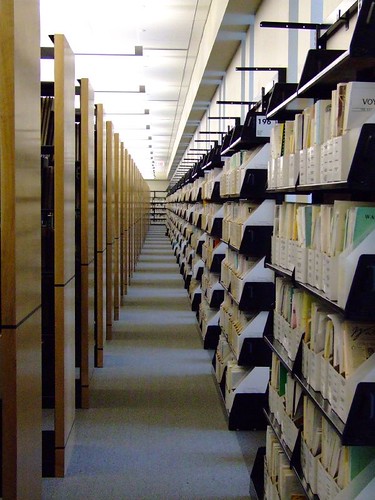 Think of all the genealogy information hiding in plain site, deep within the covers of books and publications in libraries like this.
Think of how much time is spent searching them.
Think of how much data has been stored on microfilm, with libraries such as the Church of Jesus Christ of Latter Days Saints Salt Lake City Family History Library shelves, and in the granite vault.
Genealogy is even more hip now, people are catching the spirit. Some youngsters are choosing Genealogy over video games.
The search is on, and you might be a part of it.
I don't want you to waste your time duplicating someone else's research. My main family lines are in the title of this post. If you are from the same ancestors, you are welcome to join with me in focusing on common family lines.
If you are a Cragun Bingham Porter or Salinas lets get together and attack both our dead ends and our fables.
I'm not interested in credit or being possessive, I'm interested in results.
So join me. My sister Nancy has been awesome. Nancy if you have things to post, I welcome you to be a contributor. Other cousins known and unknown also. If you aren't related, get with the concept on your family lines. If you think you can't do this you are wrong, anyone can do this if they can do email. It's about that easy to blog. We are wrapping up the last of a four session series of training. We hope to do more of these and expect that will happen.
I have setup four research blogs. Cragun is here Porter is here Bingham is here and Salinas is here.
Today I was with a new Family History missionary today at the Salt Lake City Family History Library. Her ancestors came to Australia from England. We were able to find real good copies on microfilm of births in the county of England with children having the same last name of that ancestor. The first thing I instilled within her in her training was to use research logs to record the results. As I get more focused to being back on my research I will post the research I do on the research blog of that family. Back to the concept of why duplicate each others research. There is so much not yet indexed, on microfilm, in books, in journals, and in family records. I sincerely believe in, and want to be a promoter of families working together so they don't waste time duplicating each others work.
I guess that makes me a Mormon Evangelist.
Tuesday, March 27, 2012
Is It TIme To Blog For Family History Purposes?
Please not as you read this article that I invite you to have me link to your blog, or to write an article as a contributor on this blog.
 The era of wasting time duplicating each others research is, thankfully, coming to and end.
 So is that interesting story being lost in your file cabinet a sad fact that can change.
Sure you can be the proud finder of information and keep it secret if you want, but I believe you will be persuaded that COLLABORATION is a winning concept.
Time and effort is a valuable resource. By collaborating we give ourselves the gift of each others time and effort. It's a win win concept.
There are going to be numerous vehicles for those of us, especially for those who have limited time to spend doing research.
One of those I wrote about a few days ago, is SharingTime
I wrote about this concept in the article inspired at the RootsTech conference: Click Here
Now I introduce another vehicle: Your Blog About Your Family.
To illustrate, three of my four grandparents were Mormon pioneer families: Cragun, Porter, and Bingham. Jointly they have thousands of descendants. You might think there are stories and facts easily found on line, provided by their loving descendants. Nope, if you do a google search for information on these 3 lines you find a dominance of commercial sites with a narrow slice of duplicate information and information of limited value.
However if you are searching for Patrick Cragun, for example, besides duplicate information you now find on page 1, near the top, this blog - my blog. I will explain at the end of the article why I have attained this type of search results so quickly. One reason is that it is a Google blog. Also, almost every result out there is a website, not a blog. Search engines like blogs better than websites. More on that later.
If you blogged, your site can be found by Google and other search engines. There are many benefits to that. One being unknown cousins can find you.
As important as being found is the content posted. You will care more about the content than a business will. You can post more depth of stories. You can post documents. These documents can link to the new FamilyTree that will be awesome and free. You can update and publish your research instantly. It is likely that your content is important and relevant. Search engines analyze this. Every time you update your blog with new content you automatically tell the search engines to come to your blog and copy (index) the information you just added.
The article, the photo clip above, which Google has already delivered to page 1 was an article I posted yesterday. No other sites on page 1 have fresh information on them. Most of them have far less information about Cragun. Because my content is fresh, and because I am posting several times a week I am getting priority in the searching process. The more I publish the stronger this blog will get.
In the spirit of collaboration, every that site I find that posts family history information relating to my ancestors will get exposure from my blog. I will at least provide a link to your blog, and perhaps an article. We can be a reference point to each other, at least from me to other sites. As more and more people do this with their names, the more positive results they will have.
Patrick Cragun was an immigrant. Every Cragun in the United States is likely a descendant of his. He had 9 children. Some live in the midwest nearer where he died than I do, making it more convenient for them to check out some local sources. If we are all posting our research live and cooperating or collaborating greater depth will happen in discovering our ancestors.
I am thinking of the depth of discovery the popular show, "Who Do You Think You Are" garners. Of course they have resources we don't have. Correction, they have the resources we don't have as individuals. But if all the Craguns, the Binghams, the Porters, or your ancestors were collaborating, we too could accomplish amazing things as do they.
Writing a blog such as this is not difficult. It does have a small learning curve. Setting it up only takes minutes. For some of you this is all you need to know. For others I will soon write an article on how to set up and publish a Google blog.
Final point. I hate to say this, but I know most of you won't do a blog. You could, you should, but you won't.
So here is my offer to those of you who have common ancestors to me that won't do what I propose. You can post and get author credit for posting on this blog.
My blog can become our blog. That makes it easy. Contact me if that interests you and we can discuss the details. larry@cragun.net Check my tree out by clicking here. We just might have common ancestors. Lets make more progress by collaborating.
A few reasons what I propose brings you up to the top on Google and other search engines:
Google makes sure it captures all new information on its own blog network. That's why a Google blog.
- Blogs have technology that signals the search engines to come and get the new posts.
- Blogs are easy for the search engine to analyze as to the what the content of the blog really is about.
- There are things you can do to an article to make search engines give it priority on the results.
- Blogs are so simple to setup, write on, and to customize.
- By writing multiple articles on a topic or certain topics, such as your family names you improve your results. These are done naturally and creating what is called natural search engine optimization without any gimmicks.
Tuesday, March 6, 2012
Are We Cousins? Just Asking!

Wednesday, February 15, 2012
Emma Sarah (WHITE) GUTHRIE
Born: 21 November 1841 Died: At the age of 98

The following is from the Book of Remembrance of Howard Blaine Cragun, gr-grandson of Emma Sarah (WHITE) Guthrie and Lorenzo Freeman BINGHAM and is being typed by Ruth WOOD Cragun, wife of Howard Blaine.
Be it known that I, Mrs. Emma White Guthrie, whose present residence is Harrisville, Weber County , Utah
I was born in London , England 21 Nov. 1841 . My mother’s name being Rebecca WHITE and my father’s name being Samuel WHITE. (NOTE: Father was Samuel WHITE and mother was Sarah Rebecca ADAMS rc)
My father joined the Mormon Church in 1850 at London , England
.
My father was porter in a fruit and vegetable market known as Covent Garden in the city of London France America
On the 1st day of April, 1852, myself and my father left London , England America London Zion London
As stated, on the 1st day of April 1852 we left Liverpool , England Liverpool being one hundred (100) miles away from England London
We were on board this ship exactly six (6) weeks and three (3) days from the time we left Liverpool , England New Orleans , Louisiana
Our average speed, under normal weather conditions, was forty-four (44) miles per hour on this ship, but frequently we encountered what is known as ‘headwinds’ and in such cases it was our experience to be driven back (40) or more miles, due to these headwinds.
The trip in general, for those days, was about as pleasant as we could expect. My father brought with him quite a supply of food such as bread, which we called gingerbread. This was made into large slices of toast, which was mostly our food. The ship allowed us a certain supply of food, but mostly our food consisted of our own bread, as that which was supplied by the ship was only in a very small quantities, and for liquid we were allowed one pint of water per day and myself, being under age, I was allowed one half pint of water. We brought with us our own tea, and from this water allowed us we were permitted to go to a certain part of the ship where we could heat this water to make our tea. Occasionally we were allowed a small quantity of hot water with which to make this tea in addition to that which we were usually allowed.
Our sleeping quarters were all below deck. The beds, being called ‘bunks’, were so arranged that one was above the other. Each individual had their own bunk. The main deck was used only for pleasure such as walking around, holding meetings, etc. Every evening we held one on board ship.
One of the Mormon missionaries, by the name of Captain Brown, was in charge of the four hundred (400) converts. He left Liverpool with us and was in charge throughout the trip until we landed in Zion
As previously stated, we landed in New Orleans , La. England New Orleans
After landing in New Orleans Missouri River to St. Louis , Missouri St. Louis Zion
At this camping ground, the equipment consisted of wagons and oxen teams. There were generally, what is called, three (3) yoke of oxen, to each wagon (a ‘yoke’ consisting of two (2) oxen. There were forty (40) wagons to our train (a train being the entire outfit of wagons, oxen, etc.). In a few cases there were four (4) yoke of oxen to a wagon, but not often.
We remained at this camping ground a few weeks, during which time the equipment was being put in order for our trip to ‘Zion’. Oxen had to be purchased, wagons equipped and bows and covers, etc
.
We left this camping ground headed for Salt Lake Valley Missouri Salt Lake Valley
Our main trouble was with the Indians. This was the tribe of Sioux Indians. They were a very wealthy tribe of Indians, highly painted and dressed in their style and rode the most beautiful of ponies. They would halt our train of wagons and demand food. There was no use trying to fight them, as in such an attempt they would fight to kill. Our only way out of such a predicament would be to feed them. In such cases, where we were attacked by the Indians, our Captain made (the) family of the entire 400 converts give to the Indians a certain amount of our supplies, such as half pint of sugar from each family and other food we (had) in proportion. Sugar, these Indians were very fond of and made special demands for this. The Indians were equipped with bow and arrow, scalping knives and, in a few cases of the wealthier ones, they had firearms. The main food on which the Indians lived was the buffalo they would kill.
Encouraging those Indians so frequently and having to give a certain portion of our food products to them, we were afraid we were going to run short of food ourselves. On every occasion we tried to hold out from giving them food, but they were wicked and would kill in dark. On one occasion they came in the night and frightened our cattle, causing them to stampede. In one case I recall now, our cattle were frightened away and scattered to the extent that we were two (2) days getting them rounded up and ready to pull off again. I might say, as nearly as I can recall, we had three (3) full months of traveling across the plains, walking all the way from our camping grounds in St. Louis to Salt Lake Valley.
The first mountains I recall coming to was what is known as ‘Little Mountains’ and ‘Echo Canyon Salt Lake Valley
We landed in Salt Lake Valley October 1, 1852 , a full six (6) month journey from Liverpool . We camped on what was known as ‘
Immigration Square
’, which was very near the place that is now known as
Temple Square
. No one was allowed on the place except the immigrants. Our Captain told us that we would not have to remain on this
Immigration Square
very long as there would be members of the Mormon church who would come and get us and take us to our homes. Fortunately for my father and myself we were taken by Mr. Wm. C. Staines, who was a high member of the church and later a high man in the organization of Brigham Young.
We remained there all winter, at which time my father took a notion to leave Salt Lake Salt Lake Valley
My father worked on this vicinity approximately three (3) years, building fences and digging ditches and working for other people who had located here previous to our coming.
My father and myself lived in a log cabin, which he built himself. The winter of 1853 was known as ‘the hard winter’. Terrible cold. So much so that cattle died from exposure. The snow was so deep and the weather so cold that the cattle, in trying to feed themselves by eating the bark from the trees at the river bottoms, would freeze to death standing up.
It would be difficult for me to say how we lived during that winter. I could probably best answer this question by saying, “We didn’t LIVE”. However I recall my father bringing home a bushel of wheat from a man for whom he had been working and he took it to a small mill and had it ground. We ate the best of it and then were forced to eat the balance, which we would now call ‘bran’, or ‘pig feed’.
I also recall one incident where my father would go to the river bottoms with a sled he had built and would cut the rear quarters from the cattle, which had frozen to death in the river bottoms and bring them home. Here he would do, as we called, ‘jerking’ the meat. This slicing it to fine slices, salt it and dry it. In this manner we had two burlap sacks full of this kind of dried meat. In the fall of 1857 Johnston
They had sufficient grain for their mules and they killed game for their own support. They were held back in the mountains by the Mormons until they were about starved out. In the spring of 1858 Brigham Young issued orders that all Mormons (except a few of the rear guards) were to leave this valley and go down south. This was done. Then, as stated above, Johnston’s Army was about starved out and finally sent word into the guards of the Mormons that, if the Mormons would allow them to come in, they would not fight. Word was passed on to Brigham Young and on the promise of Johnston Fort Douglas Fort Douglas Salt Lake Valley
It was after our return from the south that father and I went north and located in what is now my home in Harrisville , Utah
Friday, February 10, 2012
We Are All Stuck on Some Names Aren't We?
 |
| STUCK? |
Here are some examples of where I am stuck:
In my Porter line:
William Shaw married Martha Pool - Who were Martha's Parents?
Neil O'Neal Married Agnes or Alice - Last name would help & What
about her parents?
In my Bingham line:
Sarah Rebecca Adams, born 1800 - I don't have info on her parents either.
In my Cragun line:
I'm Stuck on Sarah Catherine Plank.She lived in the late 1700's early 1800's.
Andrew Mauer married Barbara and that's all I know.
Alexander Osborne married Martha, and that's all I know.
Charles Abbey married Fannie - who were both of their parents?
and of Course Patrick Cragun could have left us better info all around. I
would appreciate as much as possible as this original Tea Partier. (as in
Boston Tea Party)
Thursday, February 9, 2012
FInd A Grave - A Cool Research Site
I have really appreciated how much information is found on http://www.findagrave.com/ I will use an ancestor Erastus Freeman Bingham as an example. Rhonda Holton has contributed photos and information that appears on over 7,000 grave sites. I don't even know if she is a relative, but she is the administator of Erastus's find a grave memorial. Be it Rhonda or some other, the information on find a grave for Erastus and many others is a quite a find.

Erastus was president of the 38th Quorum of Seventies. In 1858, having served in the Mormon Battalion and then in state militia, Erastus was called to serve again, with the rank of Major, in the Echo Canyon campaign against Johnston's Army.
There are photos of Erastus and of his gravestone: 

There is a brief life story on Erastus: I share just a couple of paragraphs here:
When the exodus begun in 1846, leaders of the church called upon Erastus to make the roads, build the bridges, and plant the crops the Saints would need in their trek across Iowa. His wife, Olive and his two small children joined him in Council Bluffs, with the main body of the church, just in time to hear the call for the "Mormon Battalion".
Erastus was president of the 38th Quorum of Seventies. In 1858, having served in the Mormon Battalion and then in state militia, Erastus was called to serve again, with the rank of Major, in the Echo Canyon campaign against Johnston's Army.
There are links to 14 other related memorials. They are all content rich.
For the full find a grave memorial on Erastus click this link:Erastus Freeman Bingham on Find A Grave Website
Tuesday, January 31, 2012
Blanche Rebecca Bingham
This one is confusing: The birth certificate has her name as Rebecca B Bingham implying her first name is Rebecca: I am her grandson and we always were told her name was Blanche Rebecca Bingham.


Subscribe to:
Posts (Atom)